TunnelTech Wind Tunnel
German Engineering. Global Reach.

Engineering Airflow. Worldwide.

TunnelTech designs, manufactures, and services cutting-edge wind tunnel systems for customers across the globe. With our headquarters in Stuttgart, Germany, we bring German engineering and practical efficiency into every project—supporting everything from indoor skydiving and training to automotive aerodynamics, drone validation, aerospace research, and defense applications. Subsonic, supersonic, vertical, or custom-built: we create airflow environments you can trust.

10+
Years of Excellence
25+
Installations Worldwide
40+
Years Partner Expertise
30+
Years Expected Lifespan

German Engineering, Global Excellence

Since 2014, TunnelTech has redefined the standards of indoor skydiving technology. Our high-performance wind tunnels are operational worldwide—from Asia and the Middle East to Europe and the Americas—supporting premier entertainment venues, strategic military training facilities, and advanced research institutions.

TunnelTech stands at the forefront of aerodynamic innovation. Delivering German engineering excellence, our portfolio ranges from Europe's largest flight chambers to record-breaking projects in Qatar, consistently expanding the operational capabilities of vertical wind tunnel technology.

Headquartered in Stuttgart, Germany, TunnelTech houses the industry's largest in-house engineering team. By integrating mechanical, electrical, and software development under one roof, we deliver fully optimized, turnkey wind tunnel ecosystems tailored to your specific operational requirements.
TunnelTech Wind Tunnel Technology

Choose Your Perfect Solution

From compact µFLY models to FAI-compliant PRO Series flight chambers, we engineer scalable wind tunnel solutions designed for operational efficiency and championship-level performance.
µFLY
Compact Excellence

µFLY

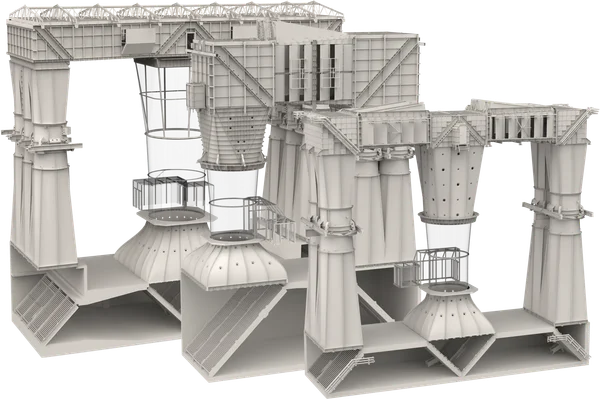
The definitive compact solution for retail and entertainment venues. The µFLY series delivers the authentic sensation of bodyflying in a space-efficient footprint, maximizing throughput and profitability without sacrificing the guest experience.

Ultra-Compact
Plug & Play
Fully Relocatable
SMART
Professional Performance

SMART

The global benchmark for modern indoor skydiving facilities. Fully FAI-compliant, the SMART series perfectly balances professional-grade aerodynamics for sport flyers with the operational efficiency required for a high-ROI commercial business.

270 km/h Speed
FAI Compliant
Active Cooling
PRO
Uncompromising Excellence

PRO

The undisputed pinnacle of wind tunnel technology. Engineered for military and elite sporting applications, the PRO series features our revolutionary passive cooling system—slashing energy costs by up to 60%—while operating as the quietest facility on the global market.
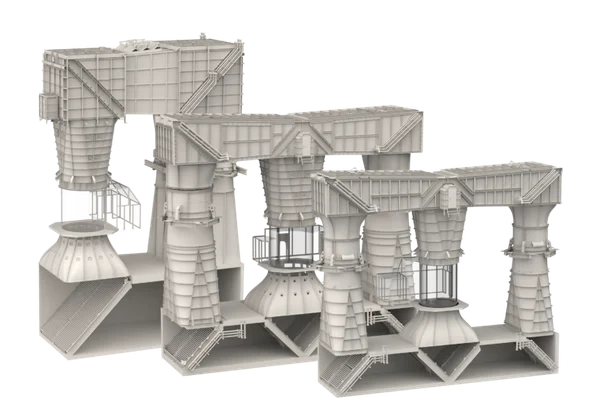
60% Energy Savings
Ultra-Quiet: 51 dBA
Championship Grade

Why Choose TunnelTech?

Leveraging the EVG Group's 40+ years of industrial fan manufacturing experience, we combine deep aerodynamic heritage with cutting-edge innovation to define the industry standard for reliability and efficiency.

Unbeatable Efficiency

Redefine your operational economics. Our proprietary passive cooling technology dramatically reduces power consumption, delivering up to 60% energy savings compared to conventional active cooling systems.

Zero Failures

Unrivaled mechanical longevity. With millions of cumulative operating hours across our global fleet, our precision-balanced drive trains boast a flawless track record, demonstrating absolute reliability in even the most demanding environments.

Sustainable Technology

Sustainable by design. Through superior aerodynamic efficiency and lightweight carbon-fiber construction, TunnelTech facilities significantly minimize energy waste and lower the carbon footprint of indoor skydiving operations.

Competition Ready

FAI-compliant engineering selected to host premier international indoor skydiving championships, delivering the precision airflow required by world-class athletes.
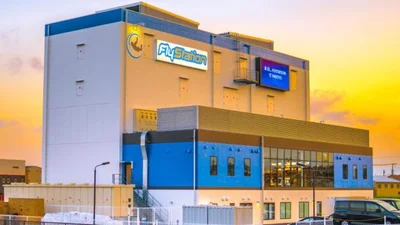
See Our Work

View our gallery showcasing precision-engineered flight chambers in action.

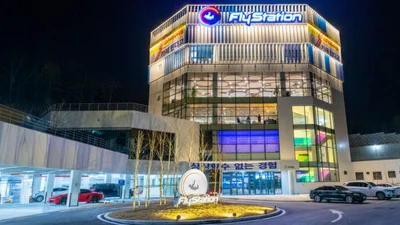
FlyStation Japan(19)
FlyStation Korea(16)
Korps Brimob Polri, Indonesia(10)
Kuzbas Arena(20)
Luxemburg Luxfly(31)
WindAlps, Chambéry, France(16)
Flow Moscow(22)
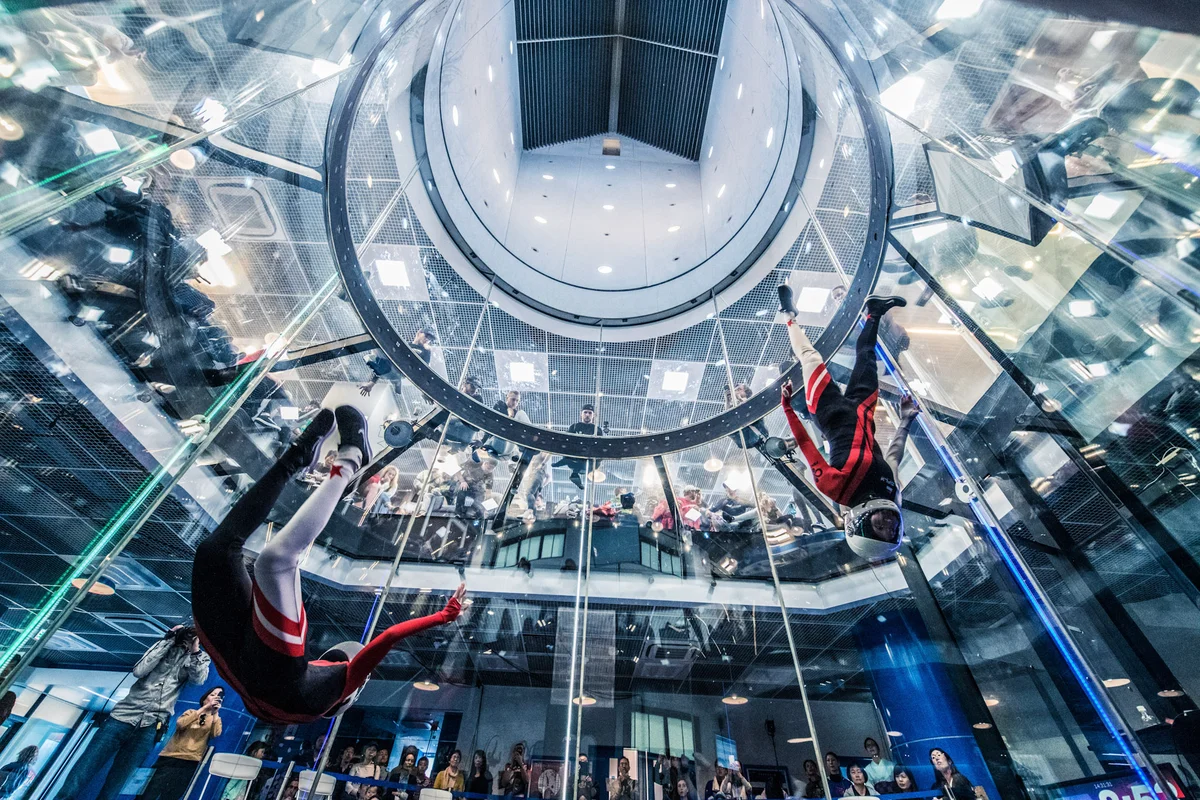
This low-angle view captures the flight chamber from the safety net looking upward. An instructor is performing a taxi flight with a student near the top of the chamber, close to the turning vanes and the base jumping camera. The pair is flying at a height of approximately 20 meters. The perspective highlights the vertical scale of the glass walls and the architectural framework surrounding the airflow column.This low-angle view captures the flight chamber from the safety net looking upward. An instructor is performing a taxi flight with a student near the top of the chamber, close to the turning vanes and the base jumping camera. The pair is flying at a height of approximately 20 meters. The perspective highlights the vertical scale of the glass walls and the architectural framework surrounding the airflow column.

Low-angle view from the safety net of an instructor taxi flying a student near the top of the chamber.

This low-angle view captures the flight chamber from the safety net looking upward. An instructor is performing a taxi flight with a student near the top of the chamber, close to the turning vanes and the base jumping camera. The pair is flying at a height of approximately 20 meters. The perspective highlights the vertical scale of the glass walls and the architectural framework surrounding the airflow column.

1 / 19

This low-angle view captures the flight chamber from the safety net looking upward. An instructor is performing a taxi flight with a student near the top of the chamber, close to the turning vanes and the base jumping camera. The pair is flying at a height of approximately 20 meters. The perspective highlights the vertical scale of the glass walls and the architectural framework surrounding the airflow column.
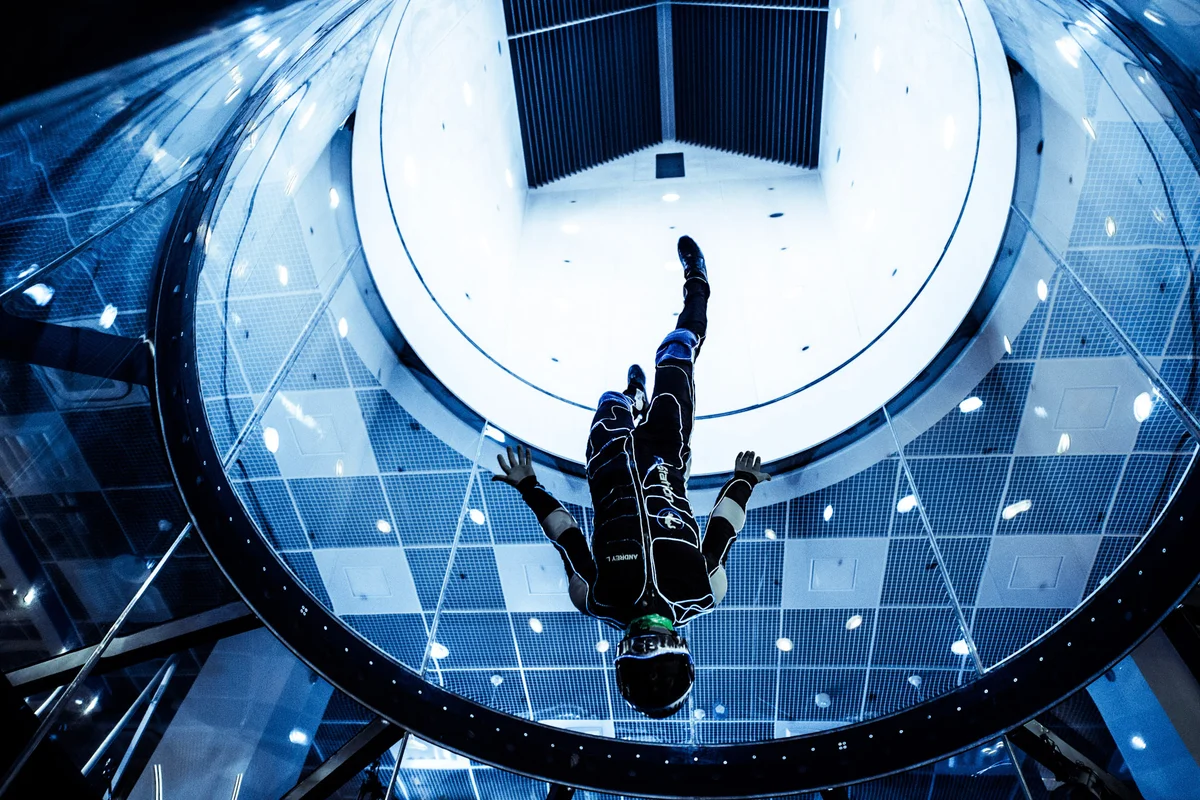
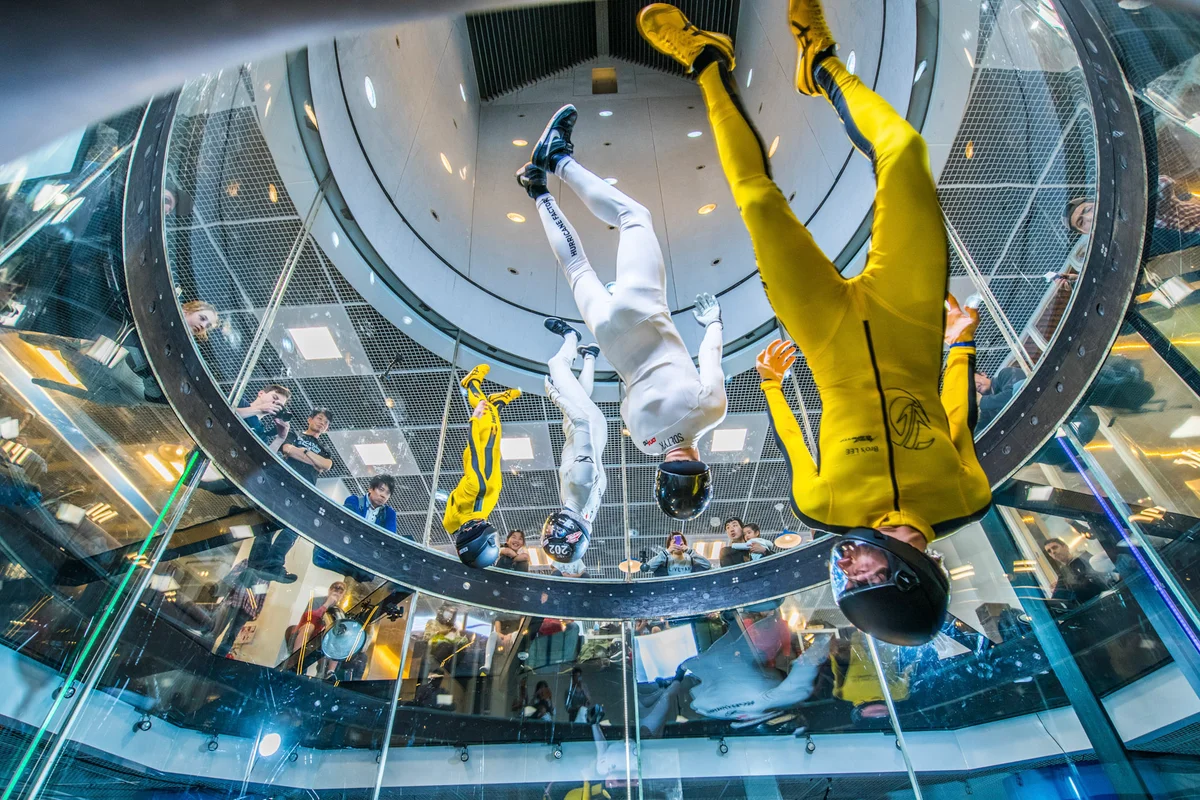
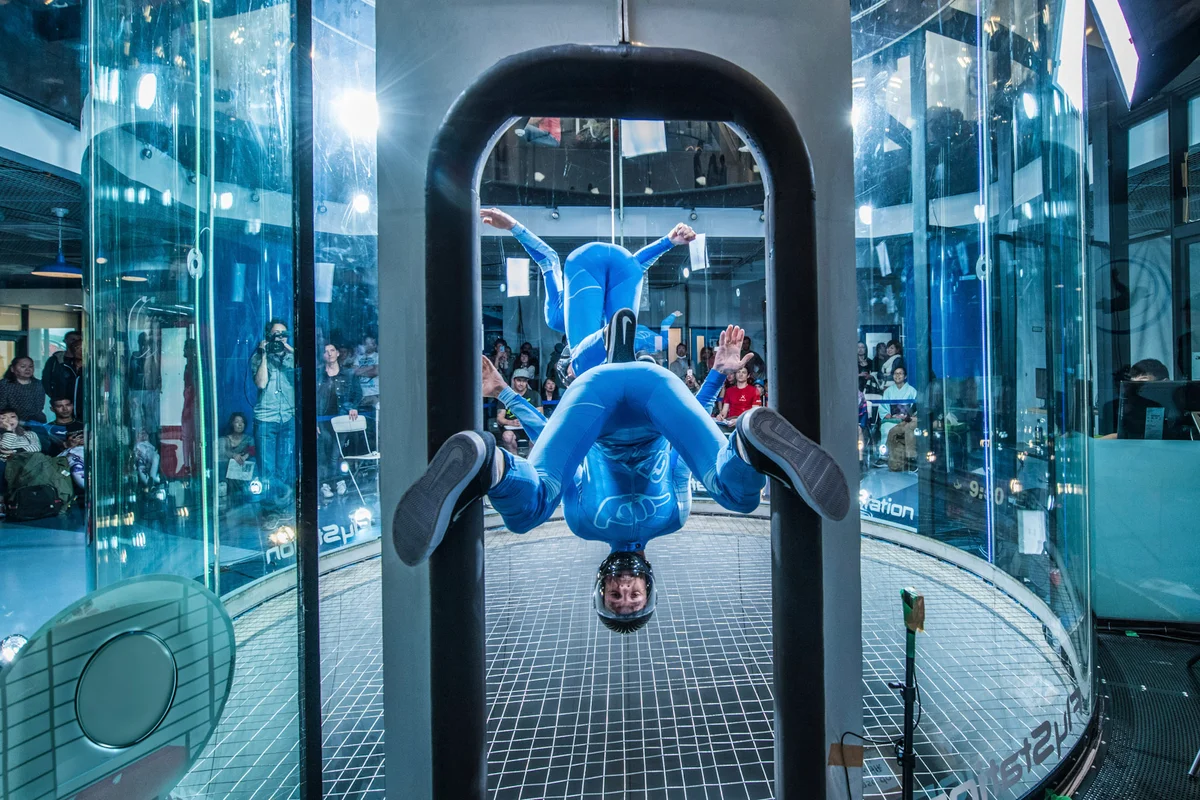
A professional flyer performs a head-down maneuver within the glass flight chamber of the TT45 PRO wind tunnel at FlyStation Japan. The upward perspective reveals the transition from the transparent flight section to the diffuser and the upper duct corner equipped with parallel turning vanes. The flyer wears a branded suit while navigating the high-speed vertical airflow. The 4.5-meter diameter chamber features curved multilayer glass panels designed for visibility and safety during advanced flight operations.
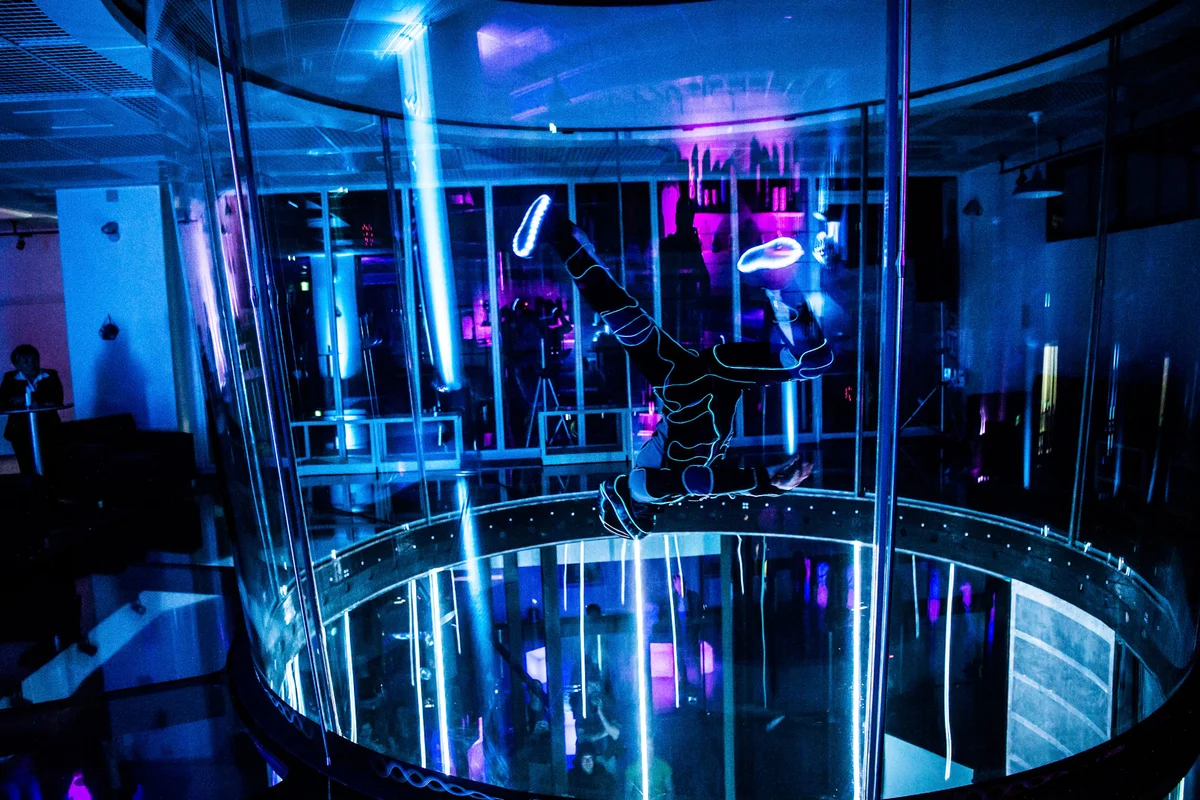
A professional flyer executes a freestyle maneuver wearing an LED-illuminated suit inside the TT45 PRO flight chamber at FlyStation Japan. The flyer maintains a head-down orientation above the safety net within the 4.5-meter diameter glass cylinder. This facility features TunnelTech's round multilayer glass walls, providing clear visibility for spectators during the performance. The dark environment and integrated lighting support the entertainment show format utilized at this specific installation.
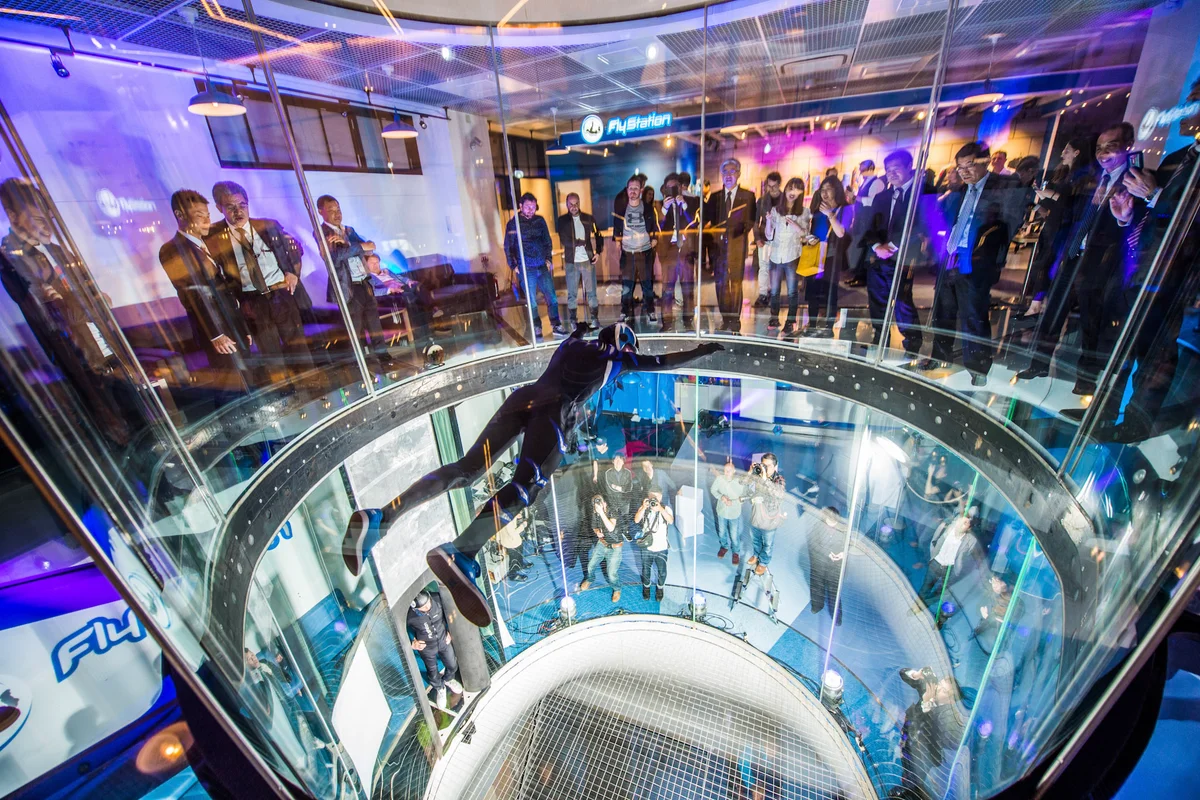
Professional flyer Leo Volkov performs inside the TT45 PRO flight chamber at FlyStation Japan. The top-down perspective reveals the cylindrical frameless glass walls and the stainless steel safety net at the base of the airflow column. Spectators observe the flight from the structural glass floor surrounding the upper section of the chamber. This 4.5-meter diameter wind tunnel features TunnelTech's signature round multilayer glass design, ensuring visibility and safety for high-speed maneuvers.
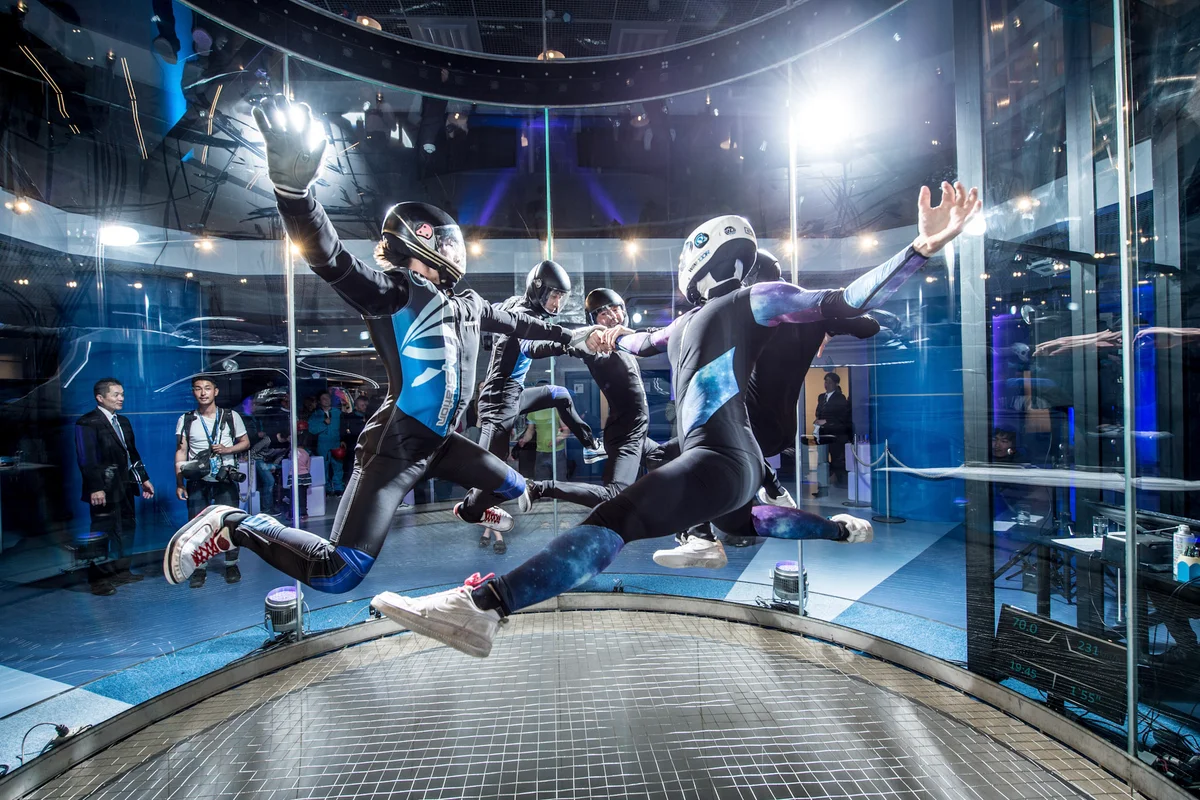
Four professional flyers execute a coordinated head-up formation inside the TT45 PRO wind tunnel at FlyStation Japan. The group maintains a sit-fly orientation above the tensioned steel cable safety net. The flight chamber features TunnelTech's signature frameless conical glass section, offering unobstructed visibility for spectators observing from the surrounding area. A digital display panel mounted inside the chamber provides real-time telemetry data during the performance.
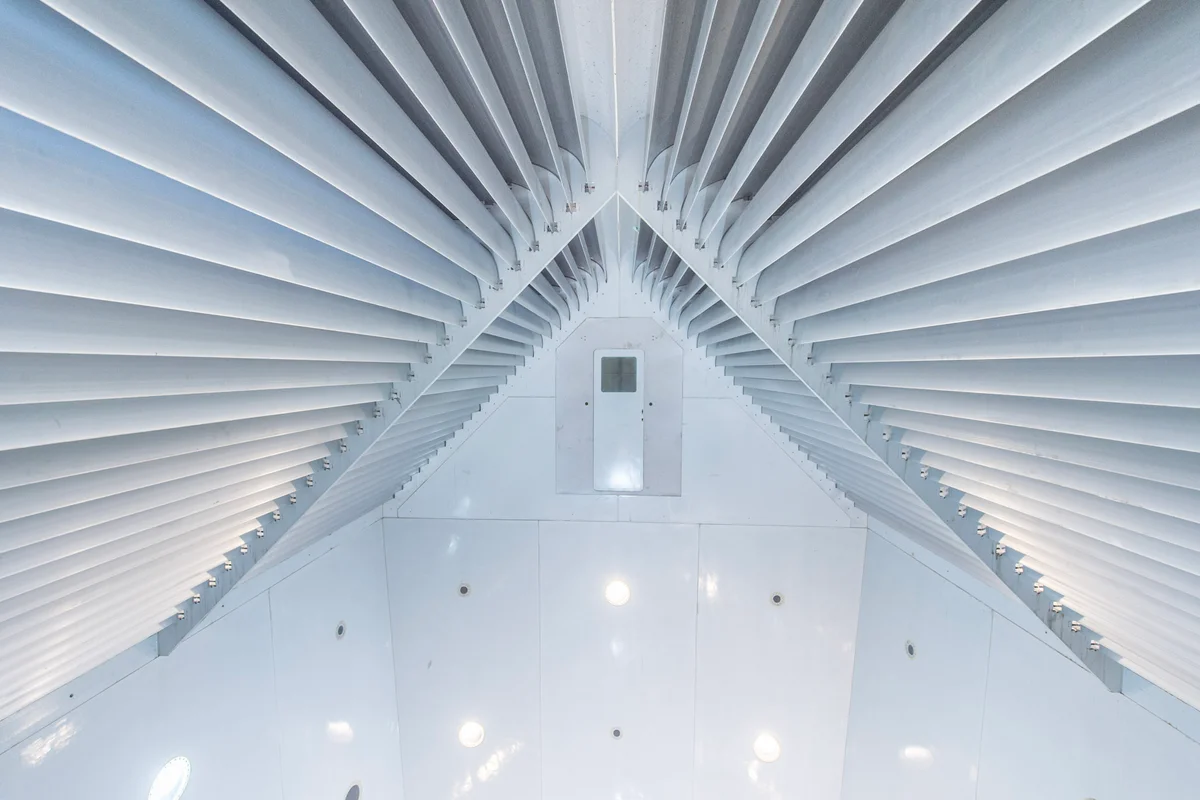
Aluminum turning vanes are positioned above the flight chamber at FlyStation Japan. The vanes form a V-shaped structure designed to split the airflow into two streams directed into the left and right return ducts. The door located at the center of the assembly is the entrance to the base jumping chamber, allowing for jumps into the flight zone from a height of nearly 20 meters.
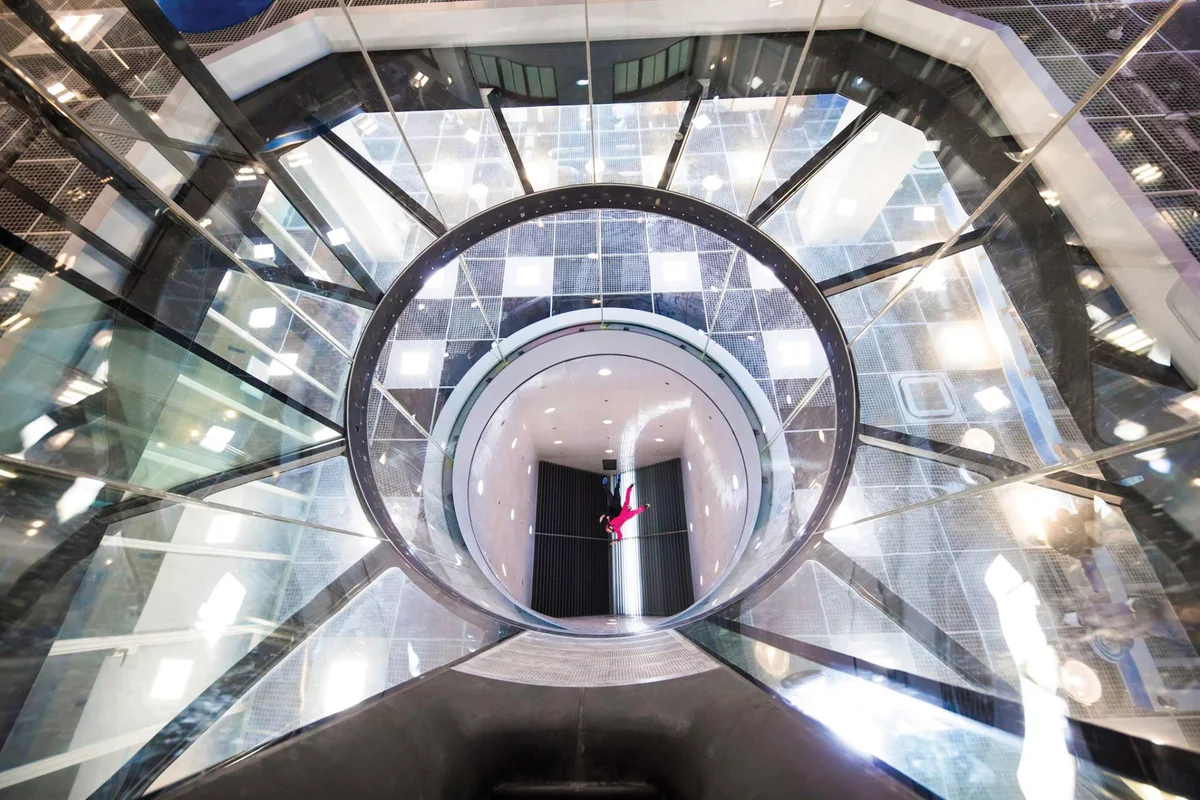
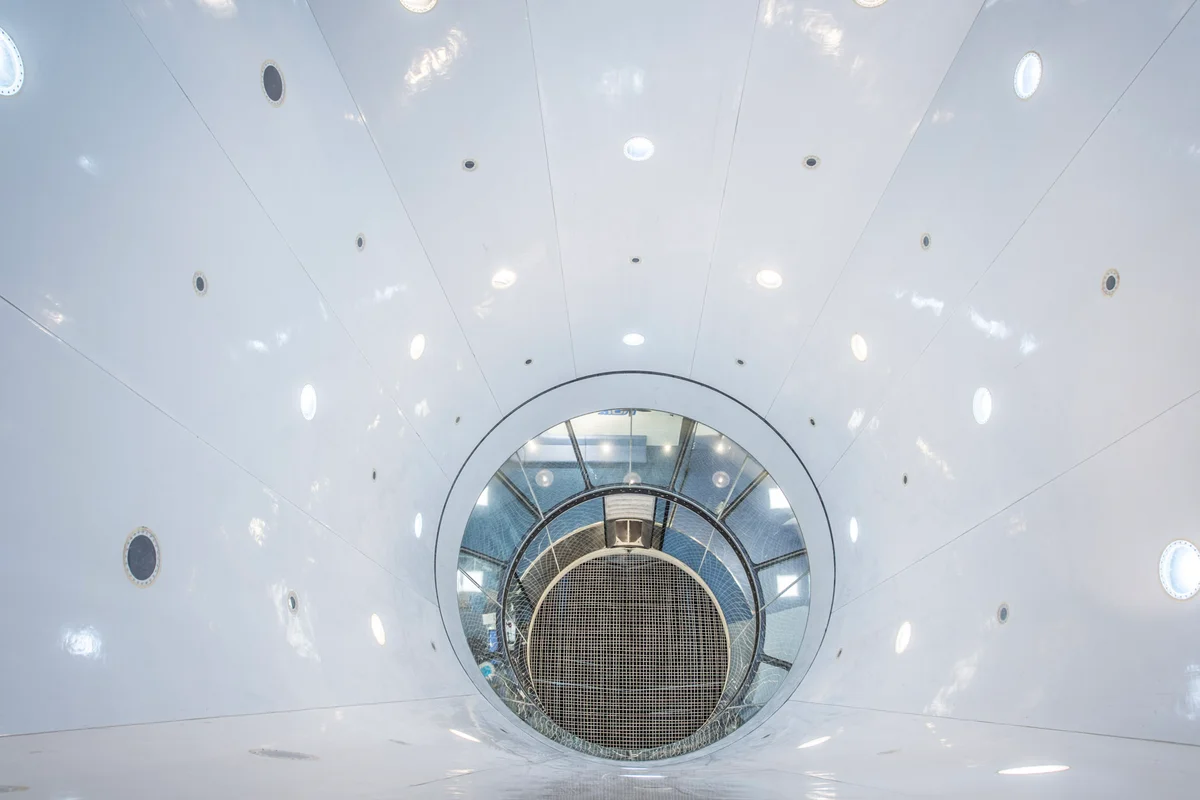
A vertical top-down view captures the interior of the TT45 PRO wind tunnel at FlyStation Japan. The perspective looks through the extended white diffuser section, lined with recessed lighting, down into the 4.5-meter cylindrical glass flight chamber. At the bottom, the steel cable safety net spans the airflow inlet. This installation features an extended upper chamber design, providing additional vertical space above the primary glass section for high-altitude maneuvers.
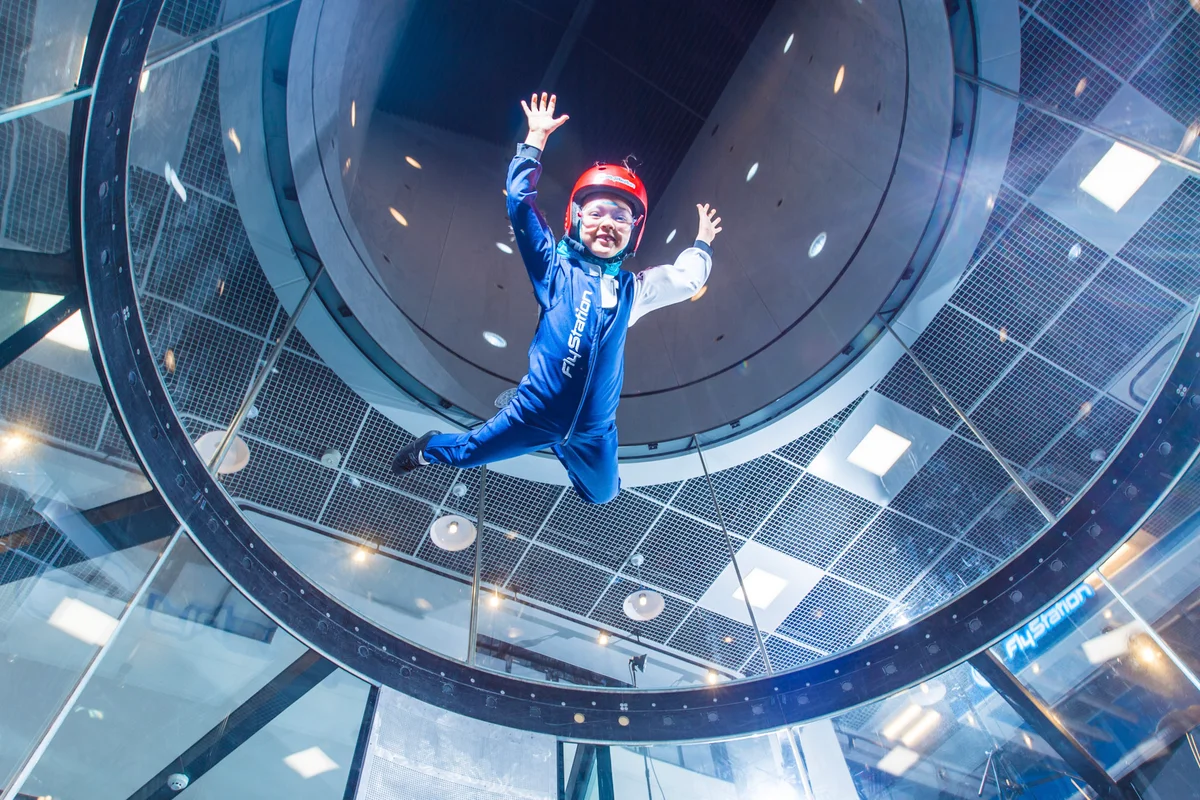
A child flies in a stable belly orientation within the 4.5-meter flight chamber at FlyStation Japan. This facility utilizes TunnelTech's TT45 Pro wind tunnel technology. The upward angle reveals the connection between the round, multilayer glass walls and the upper diffuser section equipped with recessed lighting. The flyer wears a FlyStation-branded suit and safety gear, positioned centrally in the wall-to-wall airflow. The structural ring separates the transparent viewing section from the upper technical ducting.
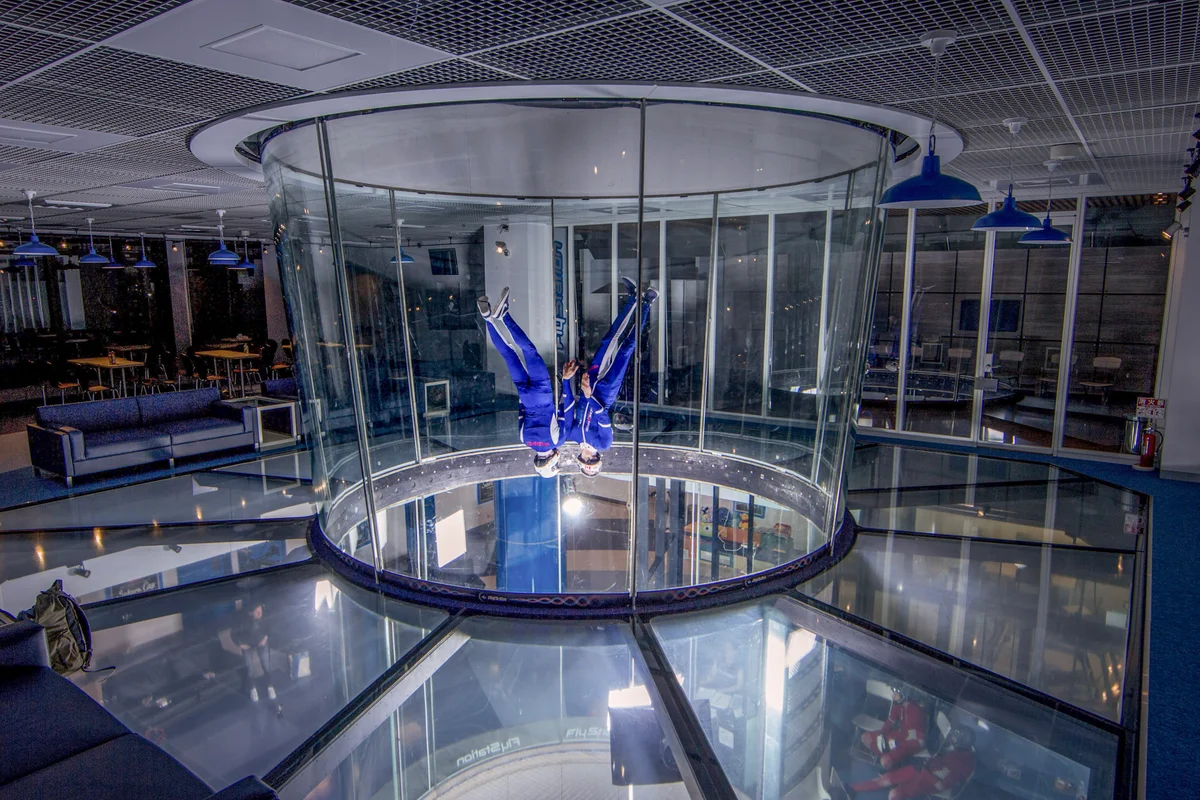
Two professional flyers execute a head-down formation inside the 4.5-meter diameter flight chamber of the TT45 PRO wind tunnel at FlyStation Japan. The installation features a transparent walkable glass floor surrounding the flight chamber, allowing visibility into the lower section of the facility. The cylindrical flight chamber is constructed from multilayer noise-absorbing glass, separating the high-speed airflow from the surrounding lounge area. The flyers maintain a vertical orientation above the steel cable safety net.
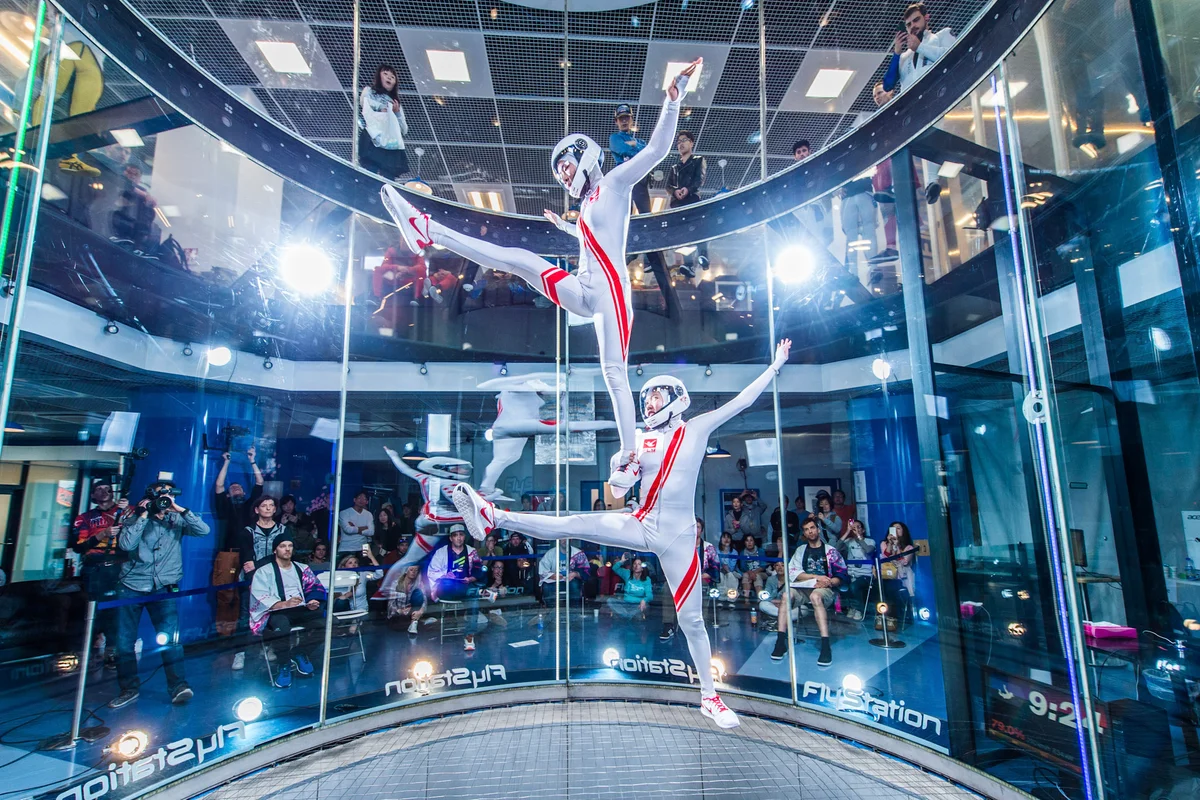
Two flyers execute a synchronized freestyle maneuver inside the TT45 PRO flight chamber at FlyStation Japan. The athletes perform a balanced formation directly above the low-drag steel cable safety net. The 4.5-meter diameter wind tunnel features frameless, multilayer glass walls, allowing spectators to view the performance from both the ground floor and the upper mezzanine level. This facility, commissioned in 2017, supports professional competitions like the Sakura Cup with stable, high-speed airflow suitable for advanced dynamic and artistic flying disciplines.
Two athletes execute synchronized head-down dynamic maneuvers inside the 4.5-meter TT45 Pro flight chamber at FlyStation Japan during the Sakura Cup. The low-angle perspective looks upward through the flight deck, framing the flyers against the upper diffuser and the facility ceiling. Spectators observe the competition through the frameless multilayer noise-absorbing glass walls that surround the 14-foot vertical wind tunnel.
Four athletes execute head-down maneuvers inside the FlyStation Japan wind tunnel during the Sakura Cup. This TT45 Pro installation features a 4.5-meter diameter flight chamber with perfectly round multilayer glass walls. The image is taken from below the transparent glass floor, looking upward past the flyers toward the upper diffuser and return air intake. Spectators observe the dynamic flying routine from the surrounding viewing deck.
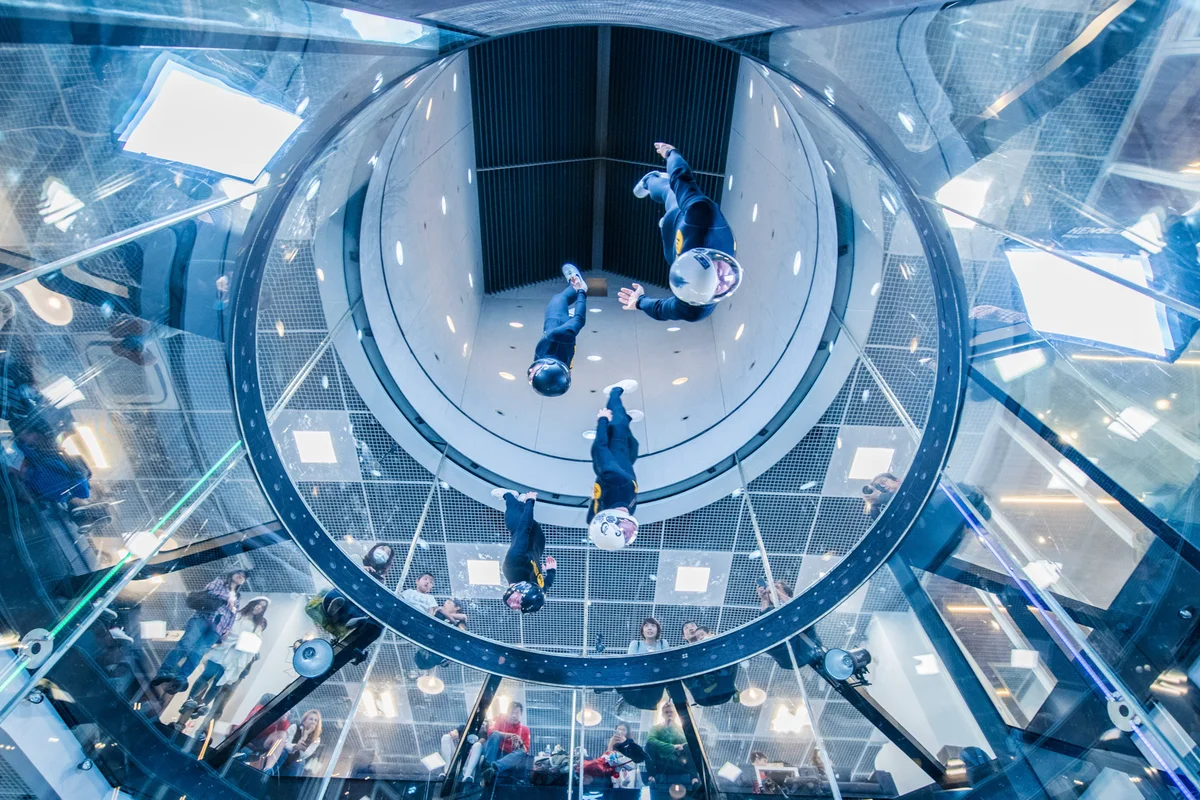
Four professional flyers perform a high-speed dive during a dynamic flying routine inside the TT45 PRO wind tunnel at FlyStation Japan. The image captures the group diving downward within the 4.5-meter diameter flight chamber, executing a dynamic sequence. The cylindrical glass section transitions into an upper concrete diffuser, with dark turning vanes visible at the top of the loop. Spectators observe the flight from beneath the transparent floor structure.
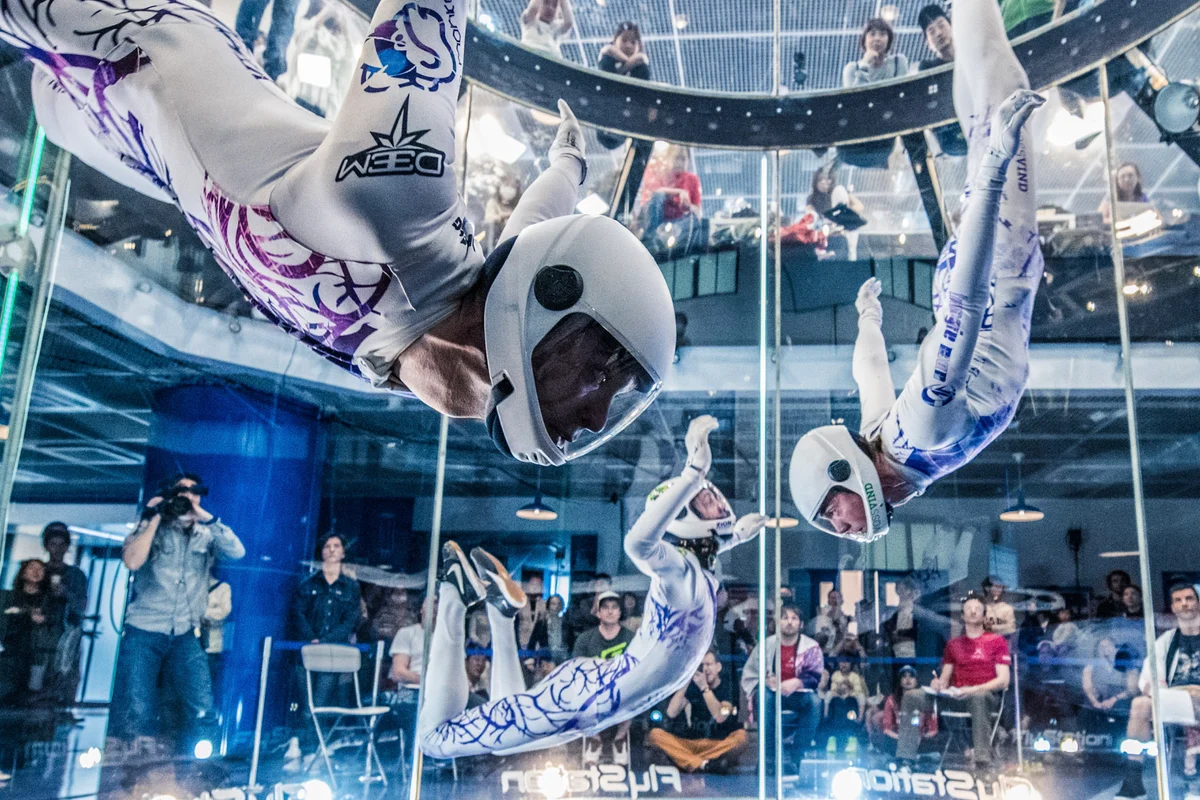
Three professional flyers execute head-down dynamic maneuvers inside the TT45 PRO flight chamber at FlyStation Japan during the Sakura Cup competition. The 4.5-meter diameter wind tunnel features frameless multilayer glass walls, providing unobstructed views for spectators and judges observing from the surrounding deck. The facility supports advanced multi-person flight disciplines, with the FlyStation branding visible near the safety net at the base of the chamber.
Two athletes perform a dynamic entrance stunt during the FlyStation Sakura Cup at FlyStation Japan. One flyer hangs inverted by hooking his legs onto the upper padded door frame, while the second flyer stands on the inverted flyer's back before launching into the flight zone. This synchronized maneuver occurs at the entrance of the TT45 PRO flight chamber, characterized by its 4.5-meter diameter glass walls and steel cable safety net.
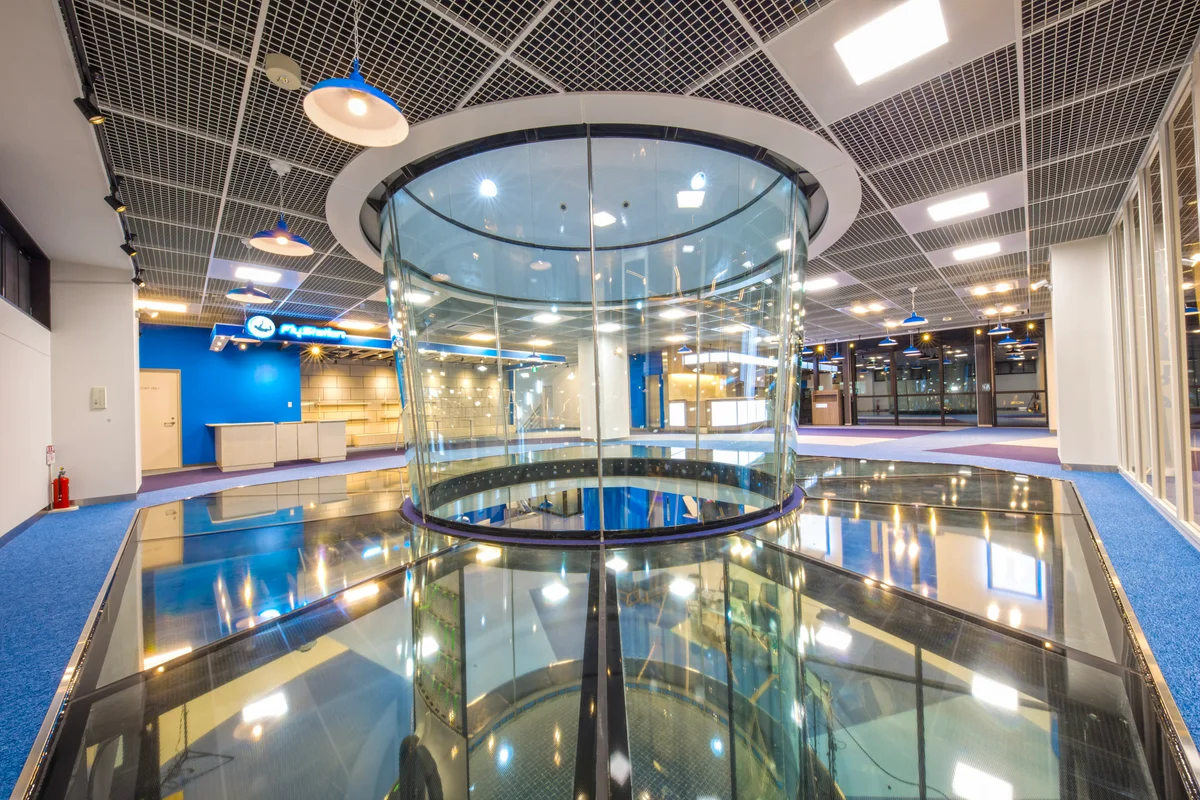
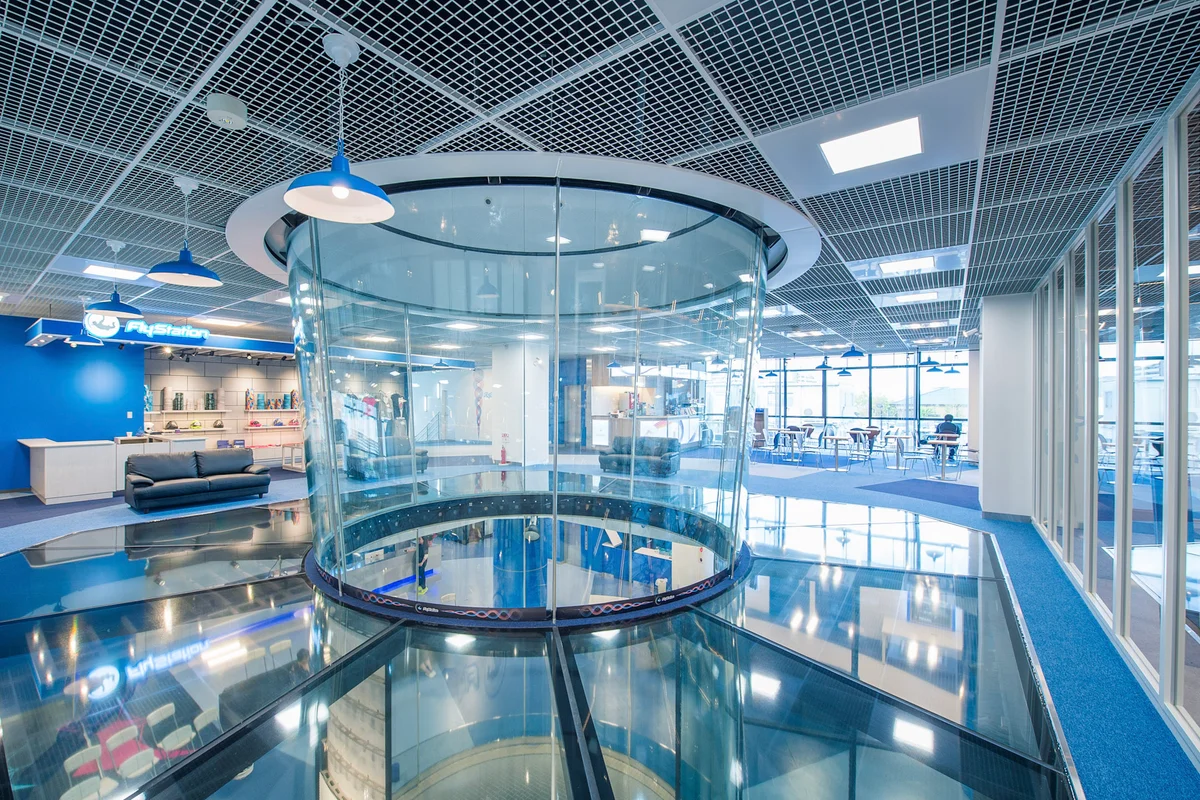
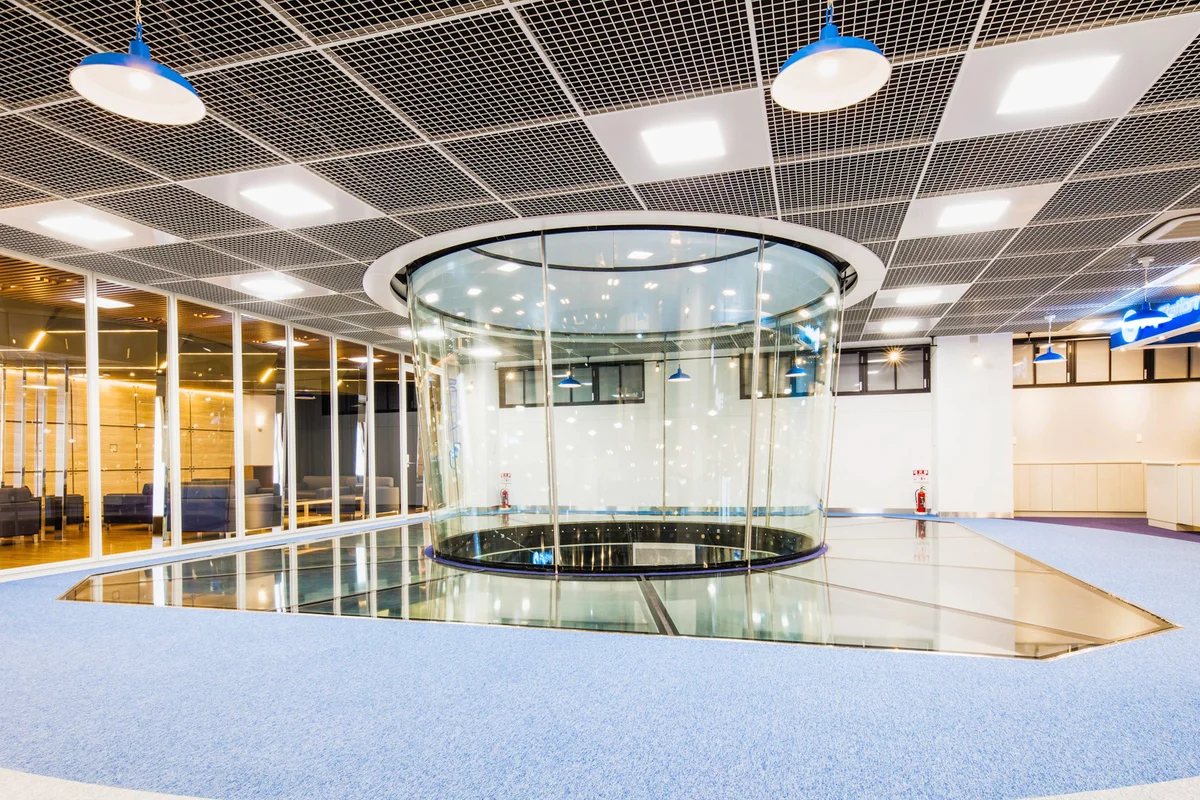
The upper section of a TT45 PRO flight chamber stands centrally within the FlyStation Japan facility. A transparent structural glass floor surrounds the 4.5-meter diameter flight chamber, allowing visibility into the lower levels. The frameless multilayer glass walls extend toward the ceiling grid, providing unobstructed views for spectators. In the background, the reception area displays the FlyStation branding. This facility was commissioned in 2017 as TunnelTech's first completed wind tunnel project.
This interior view of FlyStation Japan features the upper section of a TunnelTech TT45 Pro flight chamber. A structural glass floor encircles the tunnel, providing vertical visibility into the flying area and lower levels. The installation utilizes curved multilayer glass panels for the flight chamber walls. The surrounding commercial space includes a reception area with FlyStation branding, retail shelving, and spectator seating, showing the integration of the wind tunnel infrastructure within the facility's public zone.
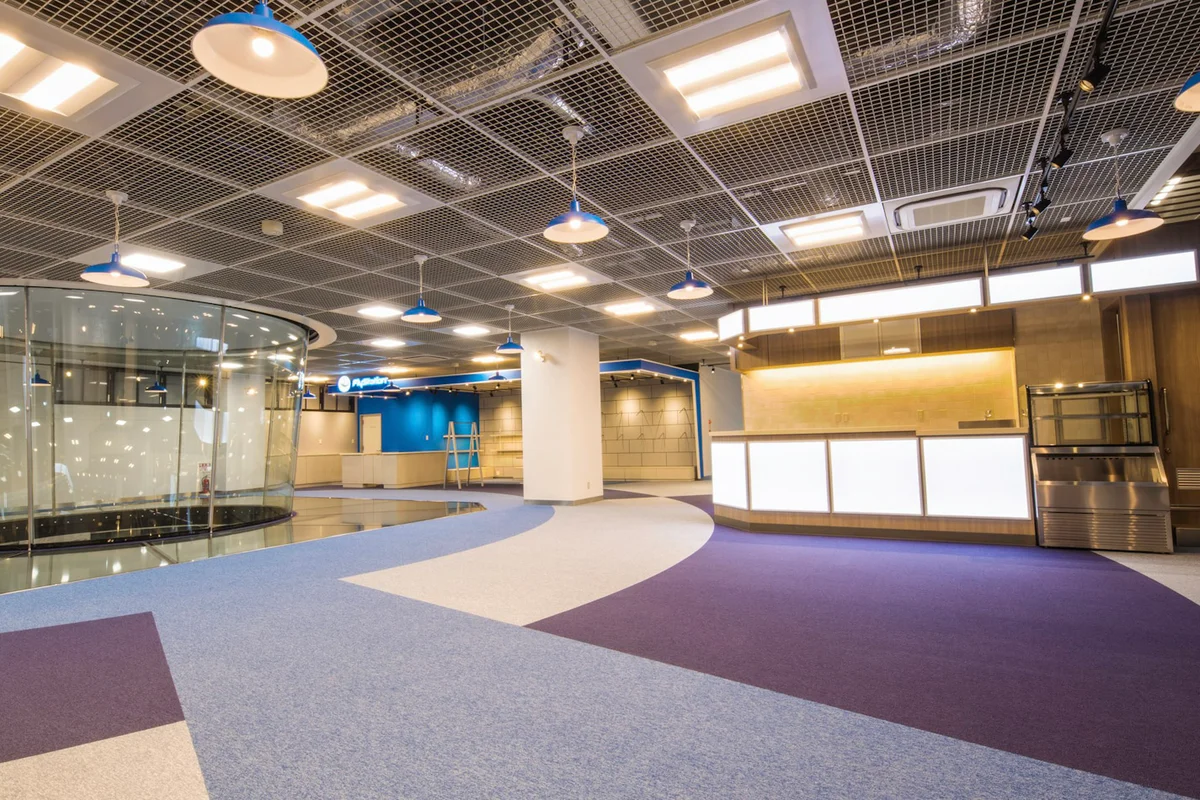
The second floor interior of the FlyStation Japan facility features the upper section of the TT45 Pro flight chamber. A structural glass floor surrounds the top of the chamber. To the right, a cafe area includes a counter with illuminated white panels. The background displays the FlyStation branding and shelving for a merchandise shop. The ceiling consists of an open grid with pendant lighting, overlooking a floor with geometric blue and purple carpeting. The reception desk is located on the first floor.
The interior of the FlyStation Japan facility features a TunnelTech TT45 PRO wind tunnel. The flight chamber utilizes round, multilayer noise-absorbing glass to contain the airflow while maximizing visibility. A walkable structural glass floor surrounds the base of the chamber, integrating the technical equipment into the public space. The surrounding area includes a reception desk and glass-partitioned viewing rooms under a grid ceiling system.

Ready to Build the Future?

Partner with our Stuttgart-based engineering team to define your requirements and realize your vision with precision-engineered solutions.