How Much Does It Cost to Build a Vertical Wind Tunnel? A CAPEX Breakdown
Discover the real cost to build a vertical wind tunnel. Learn about equipment pricing, site construction, utility requirements, and how to optimize your VWT investment.
For real estate developers, entertainment operators, and institutional investors, adding an indoor skydiving facility is a highly attractive proposition. It is a high-yield, low-competition anchor attraction. However, the first question in any feasibility study is always: how much is a wind tunnel , and what is the actual indoor skydiving cost to build ?
Building a vertical wind tunnel (VWT) is a highly specialized civil engineering and aerodynamic project. The total wind tunnel cost is split into two major components:
- Aerodynamic Machinery (CAPEX): The high-performance fans, carbon-fiber blades, control systems, glass flight chamber, and climate systems.
- Civil Engineering & Building Shell (OPEX/CAPEX): The concrete structures, flight chamber support tower, client reception areas, and specialized sound damping.
Here is the realistic financial mapping of the capital requirements needed to bring a vertical wind tunnel from blueprint to reality.
1. The Total Investment Range
Depending on the scale of the facility, the total investment for a commercial, recirculating vertical wind tunnel generally ranges from $4,500,000 to $12,000,000+ (or €4,000,000 to €10,000,000+ in Europe).
Here is how the budget is typically allocated across a standard commercial wind tunnel project with a 4.3 m flight chamber:
| CAPEX Element | Estimated Cost Range (USD) | Percentage of Total Budget |
|---|---|---|
| Aerodynamic Equipment & Tech | $2,500,000 – $5,000,000 | 45% – 50% |
| Specialized Concrete & Structural Civil Works | $1,500,000 – $4,000,000 | 30% – 35% |
| HVAC & Power Grid Integration | $300,000 – $700,000 | 5% – 8% |
| IT, POS, Booking & Safety Systems | $100,000 – $300,000 | 2% – 5% |
| Pre-Opening Marketing, Training & Working Capital | $200,000 – $500,000 | 4% – 7% |
2. Breakdown of Key Capital Allocations
A. Aerodynamic Machinery and Technology
The core of the VWT is the flight chamber and the air recirculation loop. The cost of this machinery depends heavily on the flight chamber diameter and the manufacturer.
- Chamber Diameter: A larger diameter requires substantially more airflow, requiring larger motors, turning vanes, and fan blades.
- Indicative Technology-Only Prices:
- Compact class (e.g., 3.0-3.7 m diameter, such as TunnelTech’s TT32 mFLY): Technology packages start at approximately €1,200,000 to €1,800,000 .
- Commercial standard (e.g., 4.3 m diameter, such as TunnelTech’s TT36/TT43 SMART): VWT equipment ranges from €1,800,000 to €3,500,000 .
- Professional/Elite class (e.g., 4.5-5.2 m diameter, such as TunnelTech’s TT45 PRO): Technology costs range from €3,500,000 to €5,000,000+ .
B. Civil Engineering & Structural Construction
A VWT is not a standard building anchor; it requires specialized, heavy concrete structures. The airducts of a recirculating tunnel must form a closed loop, meaning the concrete structures often extend 15 to 25 meters high or require deep underground excavation.
-
Foundation & Containment: The foundation must support massive dynamic loads from the fans and contain vibrations.
-
FRP Composite vs. Concrete Ducts:
Choosing composite airducts (such as TunnelTech’s low-friction FRP sandwich panels) can reduce construction weight and onsite concrete pouring time, reducing total civil works costs.
C. Electrical Power Grid Hookup
Operating massive 750 kW to 1,600 kW fan motors requires high-voltage power lines and dedicated transformers. Connecting to the municipal power grid and installing local substations represents a fixed cost ranging from $150,000 to $450,000 , depending on the site's proximity to regional power transmission lines.
3. Factors That Dictate Your Wind Tunnel Cost
When planning your feasibility study, keep in mind these major variables that will dictate the final vertical wind tunnel price :
-
Zoning & Noise Constraints: Building a VWT near residential zones or urban centers requires strict noise-dampening structures. While standard setups might require additional concrete acoustic barriers, utilizing an industry-leading quiet system (such as TunnelTech’s TT45 PRO at 51 dBA ) minimizes structural noise suppression costs.
-
Climate and Cooling Requirements:
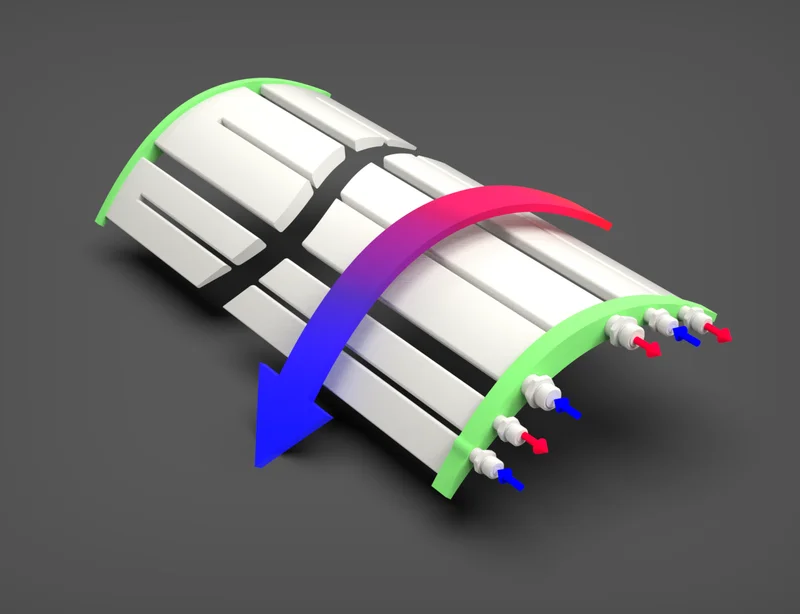
In hot climates, active chillers and massive water cooling towers are required, which adds to both initial CAPEX and monthly utility costs. Choosing a system with patented passive ventilation (which uses natural pressure differences to cool the air) saves up to 60% on cooling equipment setup and ongoing electricity costs in climates below 30°C.
- Site Configuration (Indoor vs. Standalone): Building a standalone "hero" facility with a glass facade is highly marketable but increases civil engineering costs. Retrofitting the tunnel into an existing structure (such as a shopping center mall anchor) can reduce building shell CAPEX by up to 25% .
4. How to Optimize Your CAPEX Investment
- Avoid Franchise Upfront markups: Aligning with a franchise model introduces upfront brand fees (public summaries of iFLY's 2024 Franchise Disclosure Document list a $25,000 franchise fee) and requires proprietary software and hardware packages (reported in the same summaries at up to $330,000). Bypassing franchise models and working directly with an independent manufacturer lets you buy technology at cost and leverage off-the-shelf POS software.
- Focus on Lifecycle Energy Costs: Saving 10% on initial technology CAPEX by purchasing a lower-efficiency, loud, or poorly cooled tunnel will lead to higher operating costs (OPEX) in the long run. High electricity bills and noise complaints can quickly destroy operating margins.
5. The Bottom Line: Evaluating the Investment
While a vertical wind tunnel represents a major capital expenditure, its high operating margins (often exceeding 35% EBITDA) and lack of local competition make it a highly reliable asset for entertainment hubs.
If you are evaluating project costs for your specific location, contact the engineering team at TunnelTech. We provide custom CAPEX estimations, concrete structural advice, and energy modeling to help you build a profitable, independent wind tunnel.
Request a Consultation
Request a wind tunnel project cost estimate