About

Engineered by Flyers. Built for the Future of Human Flight.

Founded by engineers with deep roots in aviation, TunnelTech delivers world-class indoor skydiving solutions and high-performance wind tunnels to entertainment and professional sectors globally.

Our Story

Established by a team combining engineering precision with direct operational experience in indoor skydiving, TunnelTech bridges the gap between technical excellence and the ultimate flight experience. Our expertise is built on years of facility management and thousands of flight hours, ensuring every tunnel we design is optimized for both aerodynamic performance and commercial viability.

Headquartered in Stuttgart, Germany, we maintain complete control over our technology by designing and manufacturing all core components in-house. Backed by over 40 years of aerodynamic production heritage, this vertical integration ensures that every TunnelTech system—from control electronics to carbon-fiber fans—embodies the rigorous standards of German engineering.

Our technology is recognized worldwide for setting industry benchmarks in silence, reliability, and efficiency—featuring revolutionary passive cooling that significantly reduces energy costs. Beyond manufacturing, we provide end-to-end solutions for commercial, military, and research applications, guiding projects from initial concept through to installation, training, and lifecycle support.

Our People

Meet the Team

An elite team of engineers and flight experts dedicated to redefining the future of wind tunnel technology

Trusted Worldwide

We're Trusted By

Trusted by premier institutions across commercial entertainment, defense, and aerospace research

Commercial Partners

LuxFlyFlow MoscowWindAlpsFlyStation KoreaFlyStation Japan

Military & Government

Royal Moroccan Armed Forces
Indonesian National Police
Qatar Armed Forces
Qatar Armed Forces
Korean Armed Forces
Korean Armed Forces

Research Institutions

NASA
NASA

Our Principles

The core principles driving our engineering and operations

Continuous Innovation

We relentlessly advance aerodynamic technology, pioneering breakthroughs like our proprietary passive cooling system to deliver superior performance and operational efficiency.

Uncompromising Quality

Engineered in Stuttgart, our systems represent the pinnacle of precision manufacturing. We utilize premium materials and carbon-fiber components to ensure unmatched durability and reliability.

True Partnership

We view every project as a long-term partnership, supporting clients from architectural planning and installation to operational training and global aftersales service.

Environmental Responsibility

We are committed to reducing the environmental footprint of vertical wind tunnels through ultra-efficient designs that strictly minimize power consumption and noise emissions.

Our Journey

Key milestones in our history
2014
TunnelTech founded in Stuttgart, Germany
2015
Partnership with EVG Lufttechnik established
2016
First international project completed
2018
FlyStation Japan sets new quality benchmark
2020
Largest wind tunnel in Europe completed
2023
Second largest wind tunnel in the world announced (Qatar)
2024
25+ projects delivered worldwide

Let's Build Something Extraordinary

Whether you are envisioning a greenfield facility, upgrading critical infrastructure, or exploring aerodynamic possibilities, partner with Stuttgart's premier engineering team to realize your vision.

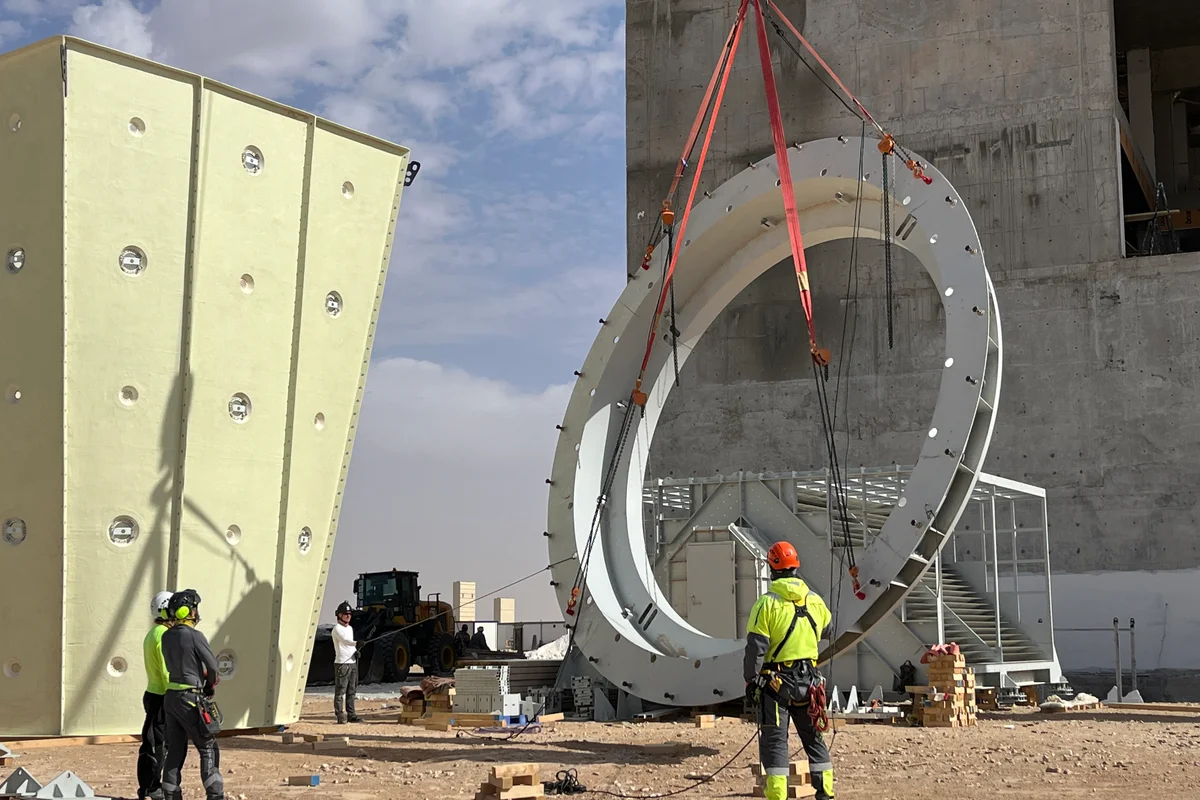
Installation personnel guide the crane lift of a large structural steel flange at a wind tunnel construction site. A vertical section of TunnelTech's FRP composite air duct stands to the left, featuring the sandwich structure designed for noise absorption and flow efficiency. The assembly process utilizes heavy lifting equipment to position large-diameter components of the aerodynamic loop. Installation personnel guide the crane lift of a large structural steel flange at a wind tunnel construction site. A vertical section of TunnelTech's FRP composite air duct stands to the left, featuring the sandwich structure designed for noise absorption and flow efficiency. The assembly process utilizes heavy lifting equipment to position large-diameter components of the aerodynamic loop.

Installation team guiding crane lift of steel flange near FRP duct section

Installation personnel guide the crane lift of a large structural steel flange at a wind tunnel construction site. A vertical section of TunnelTech's FRP composite air duct stands to the left, featuring the sandwich structure designed for noise absorption and flow efficiency. The assembly process utilizes heavy lifting equipment to position large-diameter components of the aerodynamic loop.

1 / 15

Installation personnel guide the crane lift of a large structural steel flange at a wind tunnel construction site. A vertical section of TunnelTech's FRP composite air duct stands to the left, featuring the sandwich structure designed for noise absorption and flow efficiency. The assembly process utilizes heavy lifting equipment to position large-diameter components of the aerodynamic loop.
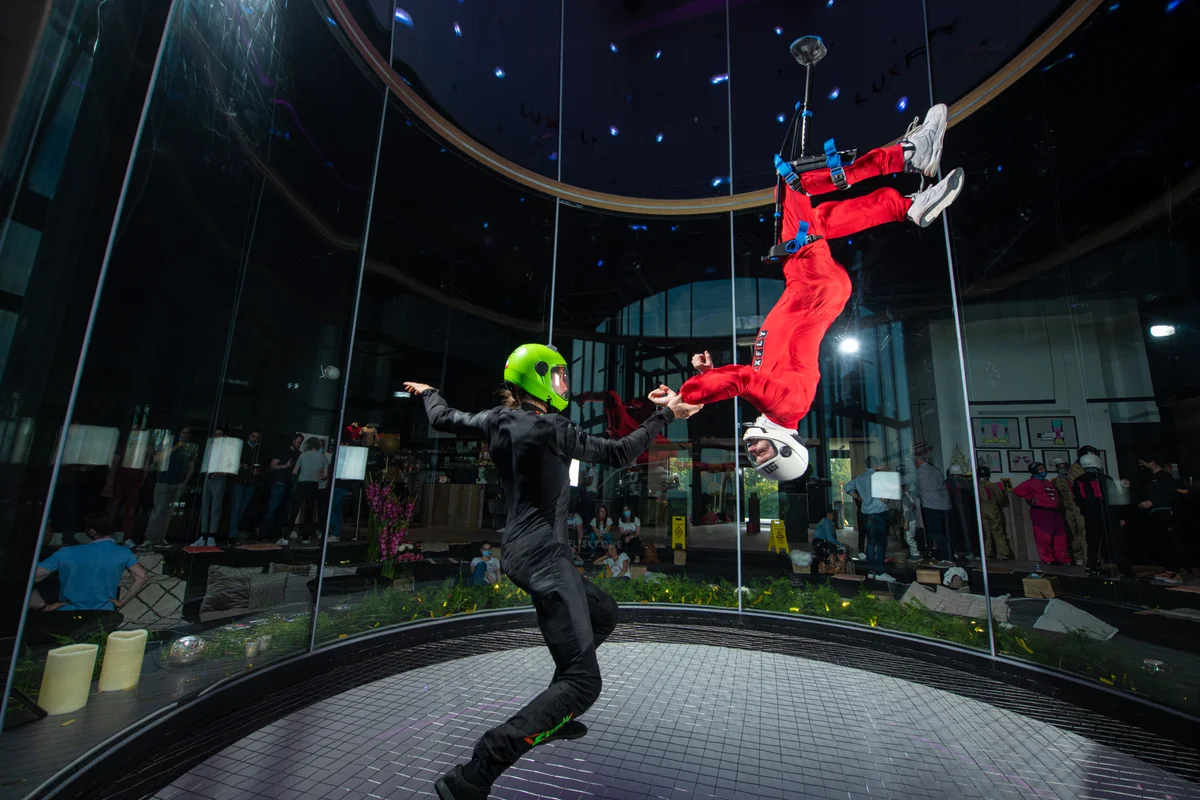
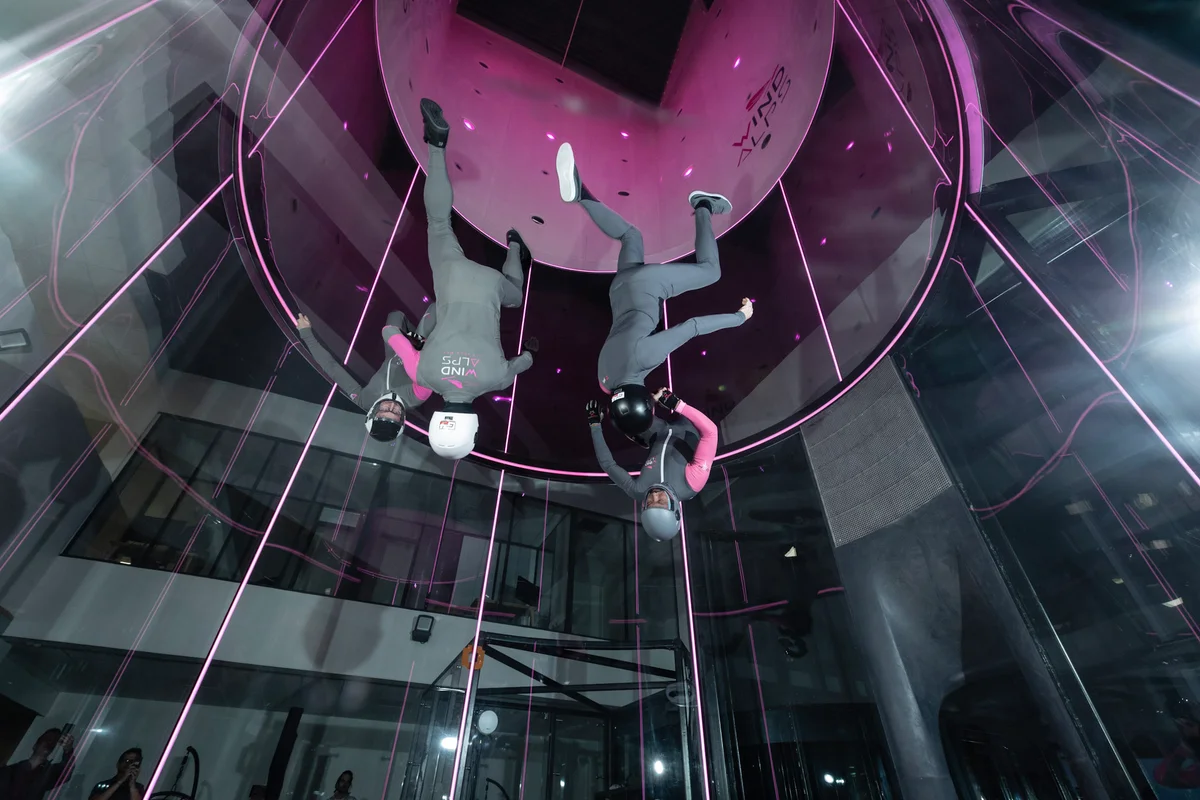
High-performance head-down training in action at WindAlps. The TT45 PRO’s smooth, high-speed airflow provides the perfect environment for professional instructors to refine their vertical flying skills under dynamic lighting.
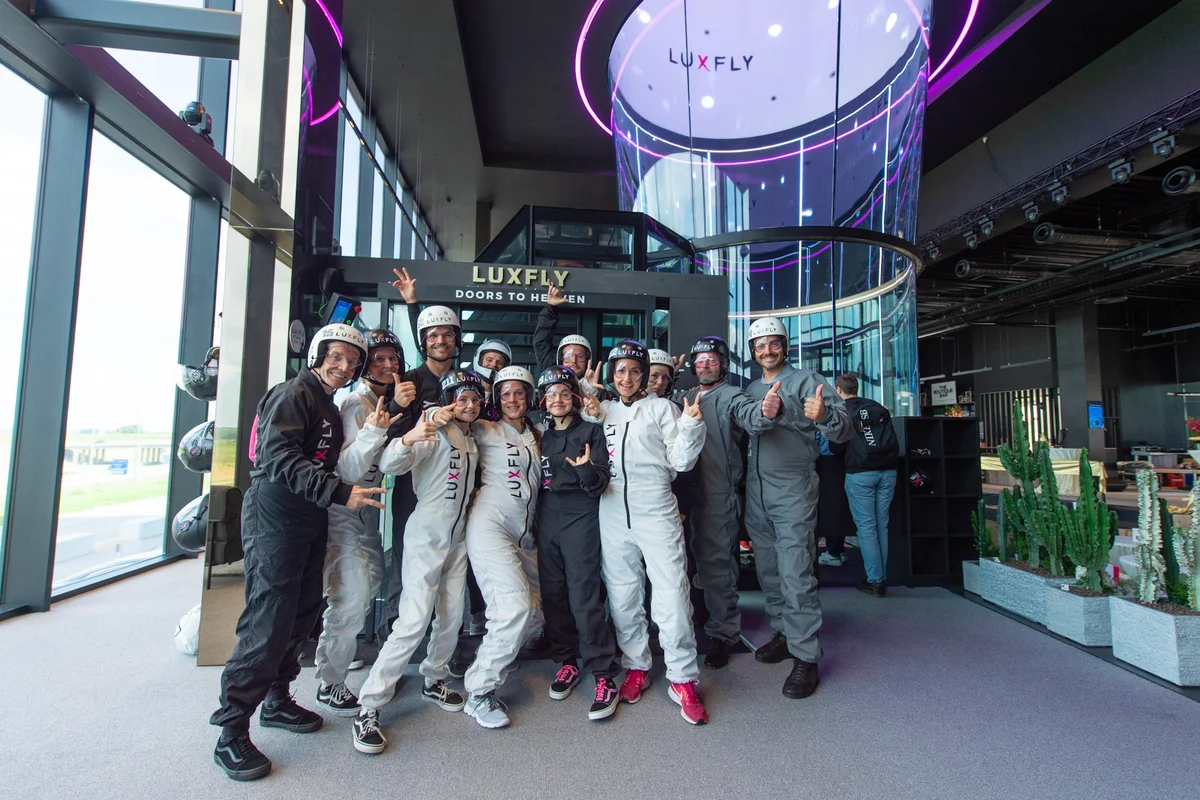
A group of flyers wearing flight suits and helmets stands in the interior of the Luxfly wind tunnel facility in Luxembourg, preparing for a flight session. The participants pose in front of the glass flight chamber entrance, labeled "Luxfly Doors to Heaven," within the modern facility.
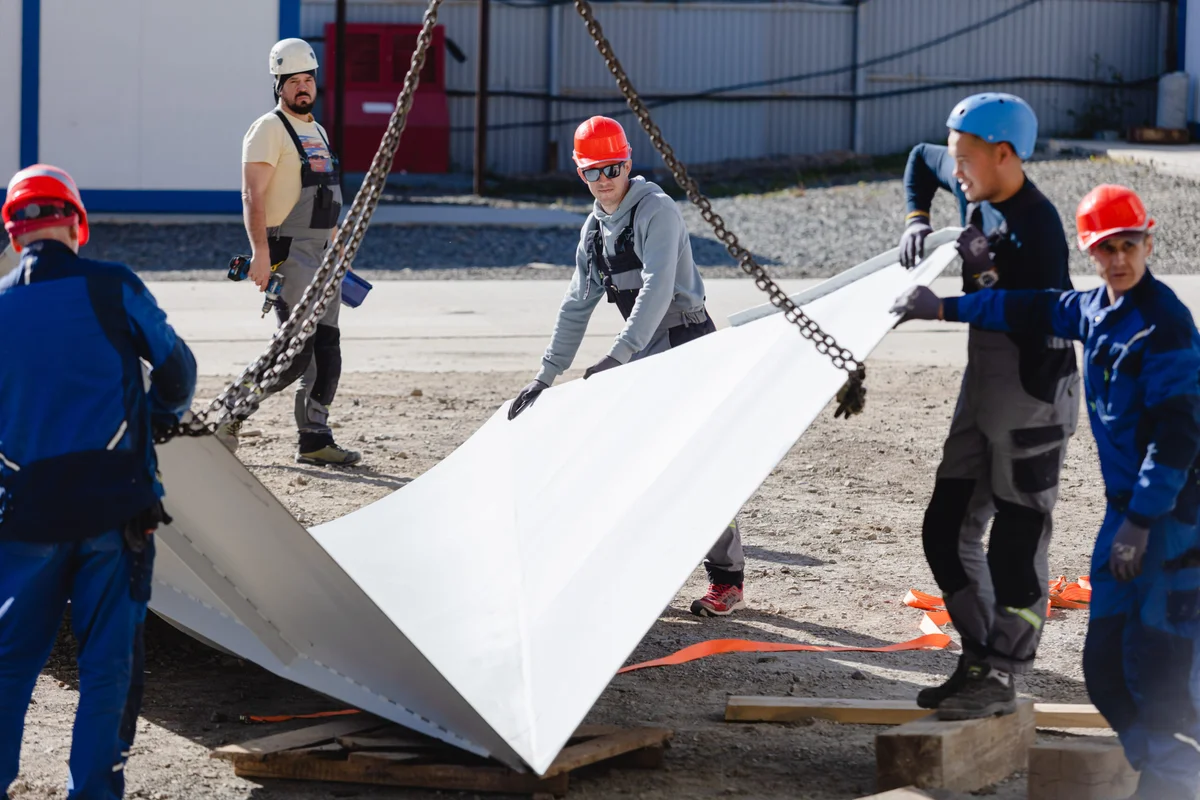
A specialized TunnelTech installation crew maneuvers a large white diffuser panel suspended by crane chains. The team guides the angular FRP composite section into position for assembly at the construction site. This structural component forms a critical part of the wind tunnel's aerodynamic loop, specifically designed to expand airflow and recover pressure downstream of the flight chamber. The workers wear standard personal protective equipment while handling the heavy load.
This shows AnreyKarr assisting Svjatoslav Lisin, who is flying head-down with his broken leg and a crutch attached
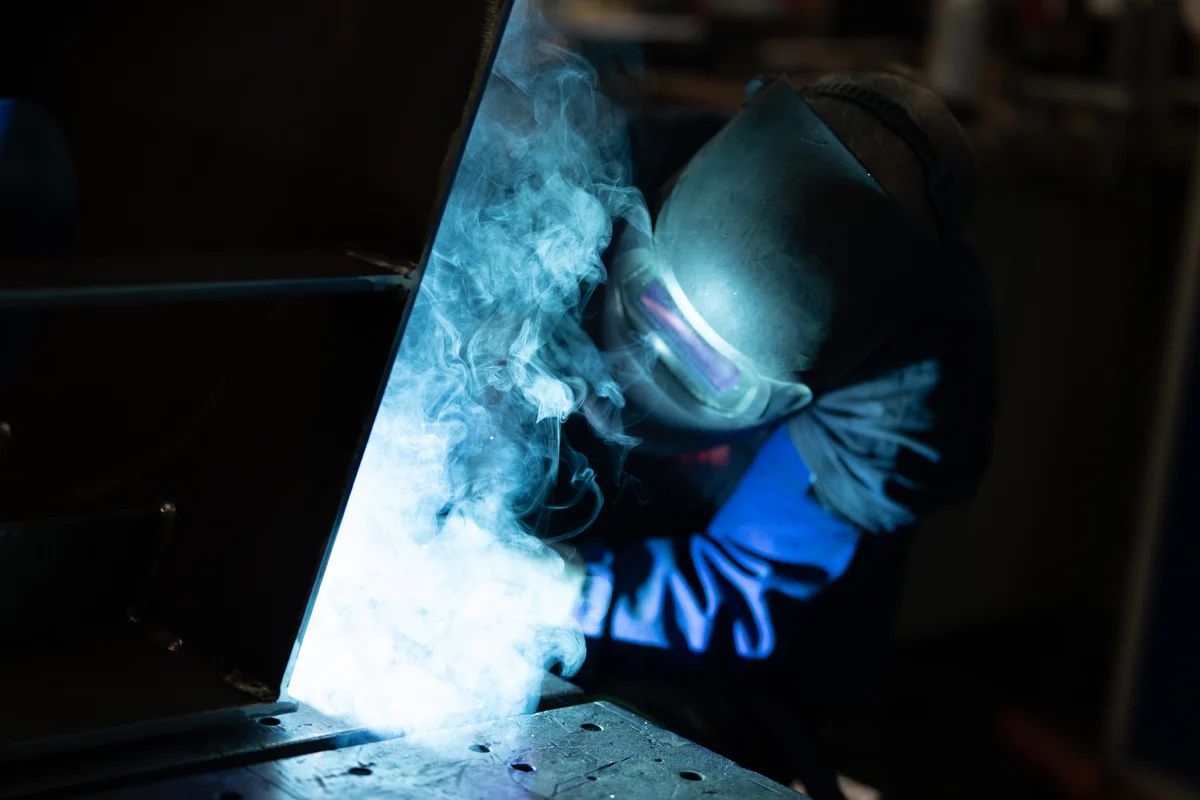
The EVG Lufttechnik welder is working on a new axial fan for the wind tunnel project
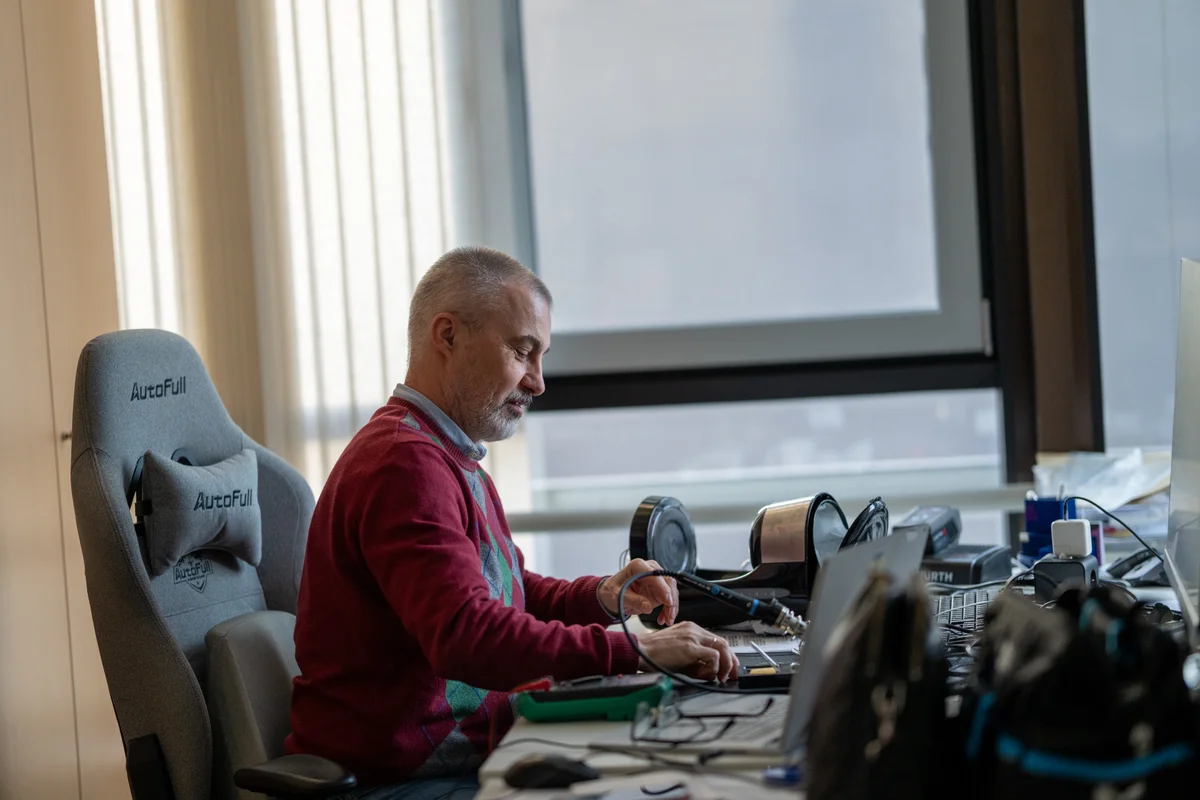
A TunnelTech engineer works at a desk equipped for electronics assembly and testing. The workspace features a soldering iron, a digital multimeter, and precision tools used for hardware maintenance or development. The engineer focuses on circuit components, supporting the company's internal production of control electronics and automation systems for wind tunnel operations.
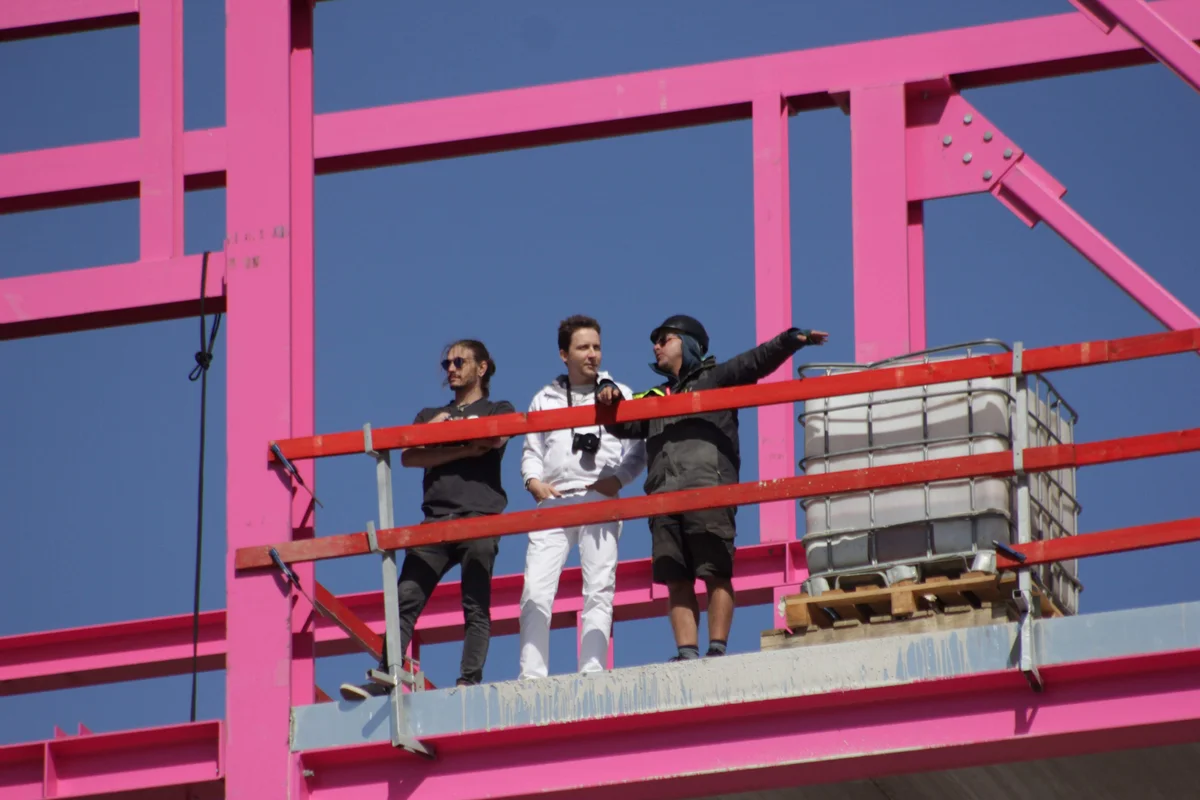
The photo shows TunnelTech's multidisciplinary engineering team engaged in LuxFly wind tunnel installation.
TunnelTech installation technicians assemble large corner duct sections containing turning vanes at an outdoor construction site. The personnel are securing the steel housing and internal vane structures, which incorporate integrated active cooling channels for thermal management. These turning vanes guide airflow through 90-degree turns to reduce pressure loss and turbulence while functioning as heat exchangers. The image shows the team preparing the heavy industrial segments for integration into the wind tunnel's return loop.
A TunnelTech installation technician performs assembly work on the exterior of vertical wind tunnel diffuser sections using rope access equipment. The large cylindrical duct segments connect via vertical bolted flanges to form the upper portion of the aerodynamic loop. This assembly technique allows the team to secure joints and inspect the structure on tall vertical components without the use of heavy scaffolding.
TunnelTech installation technicians perform rigging operations during the assembly of a TT45 PRO wind tunnel. The team members, wearing full safety harnesses and protective equipment, utilize chain hoists to position a large, curved steel duct section within the concrete facility structure. This phase of construction involves the precise alignment and bolting of heavy structural flanges to form the continuous aerodynamic loop required for the 4.5-meter flight chamber system.
This photo from TunnelTech's 'About Us' album depicts the company's management team skiing in mountains
This photo shows TunnelTech's top management team preparing to exit aircraft with their skydiving rigs
A TunnelTech installation engineer equipped with a safety harness and helmet works within the fan housing structure. The technician is positioned between large steel stator vanes, designed to straighten airflow and recover pressure downstream of the axial fan. A heavy-duty lifting strap guides the components during the assembly process. These mechanical components are part of the fan unit installation, typically located in the return duct of the recirculating wind tunnel system.
This photo shows the TunnelTech team posing beside the bearing structure of a vertical wind tunnel flight chamber