SMART Series
FAI Compliant

TT43 SMART

Championship-Ready Performance

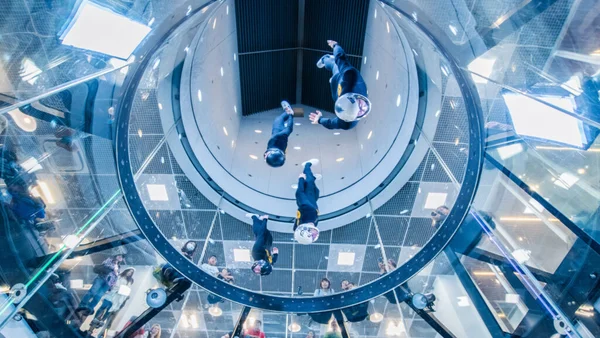
The flagship SMART series model, designed for professional training centers and competition venues. Features both single and double-loop configurations.

Chamber Diameter
4.3 m (14')
Max Speed
280 km/h
Power
1,260 kW
Noise Level
60 dBA
TT43 SMART

Key Features

4.3m FAI-compliant flight chamber
Up to 280 km/h with Beast power
Single and double-loop options
Integrated active cooling via aerodynamic turning vanes
14.51 sq.m. flight area
Professional competition features

Technical Specifications

General
Chamber Diameter4.3 m (14')
Glass Height (Default)4.2 m (13'8")
Glass Height (Maximum)10 m (32'8")
Chamber Area14.51 sq.m.
Diffusion Rate1.9

Ideal Applications

World Championships

Engineer FAI-compliant facilities capable of hosting professional indoor skydiving competitions and leagues.

Professional Training

Provide precision airflow and turbulence-free conditions for elite skydiver progression and technical coaching.

Military Training

Facilitate safe, cost-effective, and realistic freefall simulation for paratroopers and defense personnel.

Sports Complexes

A state-of-the-art anchor attraction designed to elevate modern sports complexes and recreation facilities.

Ready to Start Your Project?

Collaborate with our Stuttgart-based engineering team to configure the ideal high-performance wind tunnel solution for your specific goals.

A large circular stator vane assembly sits on the ground during the installation of a TT43 Smart wind tunnel at China Flight Town. The component features fixed radial guide vanes arranged between an inner hub and outer casing, designed to manage airflow within the axial fan section. The TTE GMBH logo is visible on the exterior of the steel housing. Construction equipment, including a forklift and power tools, surrounds the unit with the facility building in the background.A large circular stator vane assembly sits on the ground during the installation of a TT43 Smart wind tunnel at China Flight Town. The component features fixed radial guide vanes arranged between an inner hub and outer casing, designed to manage airflow within the axial fan section. The TTE GMBH logo is visible on the exterior of the steel housing. Construction equipment, including a forklift and power tools, surrounds the unit with the facility building in the background.

Stator vane assembly for TT43 Smart wind tunnel installation at China Flight Town

A large circular stator vane assembly sits on the ground during the installation of a TT43 Smart wind tunnel at China Flight Town. The component features fixed radial guide vanes arranged between an inner hub and outer casing, designed to manage airflow within the axial fan section. The TTE GMBH logo is visible on the exterior of the steel housing. Construction equipment, including a forklift and power tools, surrounds the unit with the facility building in the background.

1 / 27

A large circular stator vane assembly sits on the ground during the installation of a TT43 Smart wind tunnel at China Flight Town. The component features fixed radial guide vanes arranged between an inner hub and outer casing, designed to manage airflow within the axial fan section. The TTE GMBH logo is visible on the exterior of the steel housing. Construction equipment, including a forklift and power tools, surrounds the unit with the facility building in the background.
A heavy-duty crane lifts a circular stator vane ring into position during the installation of a TT43 Smart wind tunnel at the Flight Town project in China. This component is part of the axial fan assembly and features stationary vanes designed to straighten airflow within the loop. To the left, a large prefabricated steel duct section stands ready for integration into the wind tunnel structure.
Installation of a turning vane assembly with integrated active cooling at the China Flight Town project. This component belongs to a TT43 Smart wind tunnel and combines airflow redirection with thermal management capabilities. The aluminum vanes contain internal coolant channels to dissipate heat generated during operation. The assembly is suspended by crane rigging within the concrete facility structure, ready for placement in the return duct corner.
Technicians guide the installation of active cooling turning vanes into the concrete duct structure of the TT43 Smart wind tunnel at China Flight Town. A crane lowers the aluminum vane segment through an upper opening into the return loop. These turning vanes incorporate internal coolant channels to function as heat exchangers, managing air temperature while redirecting airflow 90 degrees with minimal turbulence and pressure loss.
A rope access technician guides the installation of the axial fan stator vane assembly into the concrete housing. This heavy lift operation is part of the construction of a TunnelTech TT43 Smart wind tunnel at the China Flight Town project. The steel section contains the stationary stator vanes required to straighten airflow within the vertical return duct. The component is suspended by red lifting straps as it descends into the facility's concrete structure.
A crane lifts a section of turning vanes during the installation of a TT43 Smart wind tunnel at the China Flight Town project. Construction personnel guide the steel-framed unit, which contains integrated coolant channels for the facility's active cooling system. These vanes function as heat exchangers to regulate airflow temperature while redirecting air through the corner of the recirculating duct loop.
A heavy-duty crane lowers a blue EVG axial fan unit into the vertical concrete return air duct of a TT43 Smart wind tunnel at the China Flight Town facility. The fan assembly, featuring carbon-fiber blades, descends toward a stationary guide vane structure positioned at the base of the shaft. Installation technicians guide the load using rope access techniques to ensure precise alignment within the concrete housing. This installation step places the primary airflow generation components within the return loop structure.
Construction workers guide the installation of a high-power axial fan unit for a TunnelTech TT43 Smart wind tunnel at the China Flight Town project. The blue steel fan housing, suspended by heavy-duty crane straps, descends into the vertical concrete shaft of the return duct. Visible below the housing is the fan impeller featuring carbon-fiber blades, designed for efficient operation within the recirculating airflow loop.
A heavy-duty crane hoists a large FRP composite diffuser section during the assembly of a TT43 Smart wind tunnel. This component forms part of the upper aerodynamic loop, designed to expand airflow and recover pressure above the flight chamber. The installation is taking place at the Flight Town facility in China. The image captures the rigging and positioning of the ductwork segment against the sky.
A heavy-duty crane lowers the pre-assembled safety net structure into position at the China Flight Town facility. The assembly features a rigid steel frame supporting the low-drag cable floor, which serves as the bottom of the flight chamber. Installation technicians guide the unit onto the concrete bearing structure. This component is part of a TunnelTech TT43 Smart wind tunnel, utilizing a 4.3-meter diameter configuration optimized for both entertainment and professional indoor skydiving.
Exterior view of the ongoing construction at the China Flight Town project site. The facility houses a TunnelTech TT43 Smart vertical wind tunnel. Scaffolding and green safety netting cover the building facade, while mechanical housing structures for the wind tunnel loop are visible on the upper level. The construction site sits adjacent to a finished sports field with artificial turf. This installation features a 4.3-meter flight chamber diameter suitable for professional training and commercial operations.
Installation of the TT43 Smart wind tunnel at China Flight Town proceeds with the lifting of a flight chamber diffuser section. The white component features a circular aperture that connects to the flight area. In the background, a horizontal return duct section equipped with black turning vanes rests on the structural steel scaffolding. Construction personnel manage the rigging straps to align the heavy aerodynamic segment.
A crane lowers the upper section of the flight chamber containing turning vanes during the installation of the SmartFly 4.3 wind tunnel at China Flight Town. This component functions as a flow splitter for the double-loop configuration, dividing the vertical airflow into two separate paths: one directing air to the return duct in the foreground and the other to the rear. Workers on scaffolding guide the steel structure into position above the plenum base.
Technicians install a curved glass panel for the flight chamber of a TT43 Smart wind tunnel at the China Flight Town project. A heavy-duty vacuum lifter attached to a crane positions the multilayer noise-absorbing glass section into the steel framework. The installation team utilizes rope access techniques and ladders to align the chemically strengthened glass, ensuring precise fitment for the 4.3-meter diameter flight area.
TunnelTech technicians install curved multilayer glass panels for a TT43 Smart wind tunnel flight chamber at the China Flight Town facility. A spider crane equipped with a vacuum lifter positions the heavy glass segment while a team utilizes rope access and ladders for precise alignment. The installation process assembles the 4.3-meter diameter cylindrical flight chamber, utilizing chemically strengthened glass to ensure structural safety and consistent airflow aerodynamics.
This vertical perspective looks down from the upper return duct into the flight chamber of a TT43 Smart wind tunnel at the China Flight Town facility. Rows of aerodynamic turning vanes line the upper corners to guide airflow and reduce turbulence. Below the vane section, the white diffuser walls transition into the 4.3-meter diameter glass flight chamber. Rigging ropes and ladders visible inside the structure indicate the ongoing installation process of the mechanical and structural components.
A rope access engineer is suspended beneath the safety net, performing installation work on the contraction section (confusor). The perspective looks upward through the steel cable net and the flight chamber, providing a view of the turning vanes at the top of the loop. The technician is positioned within the white composite contraction cone, utilizing rigging to access the surface below the flight deck.
Technicians perform rope access installation in the upper section of the flight chamber for the TT43 Smart wind tunnel at China Flight Town. The image displays the white composite structure featuring circular cutouts designed for the installation of lighting sources. Above the workers, a rectangular door provides access to the BASE jumping chamber. At the top of the section, turning vanes are arranged in a V-shape configuration to split the airflow into the left and right return ducts.
The TT43 Smart flight chamber at the China Flight Town facility features a 4.3-meter diameter cylindrical glass section. Perfectly round multilayer glass panels form the transparent walls, illuminated by vertical LED strips. The structure connects to the upper diffuser and FRP air ducts above the flight volume. At the base, the safety net utilizes low-drag steel cables. This installation utilizes the extended glass configuration available in the SMARTfly series, situated within a modern commercial building interior.
The glass antechamber and sliding entrance door provide access to the TT43 Smart flight chamber at the China Flight Town facility. This view through the airlock shows the transition into the flying area, featuring black steel framing and multilayer glass panels. Inside the chamber, the steel cable safety net and blue padded entrance surround are visible, designed to absorb impact and maintain even airflow during operation.