Technology

Engineering Excellence

Explore the German engineering innovations that establish TunnelTech as the global benchmark for performance, energy efficiency, and operational reliability.

Flight Chamber

Where the magic happens - a revolutionary design for maximum safety and comfort.

  • Revolutionary safety net made of low-drag steel cables absorbs impact at the outer edge
  • Padded entrance prevents injuries and maintains even airflow
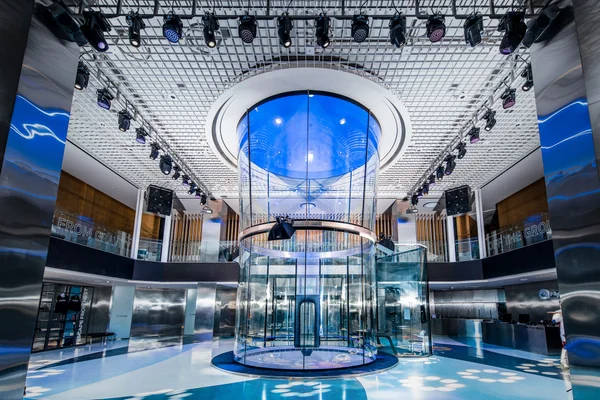
  • TT signature conical glass frameless section for 2x visible flying space
  • Perfectly round multilayer noise-absorbing glass for even airflow
  • Chamber height up to 24m with glass sections up to 8m
  • Airspeed reduction of 2.12x for critical safety
Technical Specifications
Chamber Height
Up to 24m (79')
Glass Height
Up to 8m (26')
Min Diameter
4.5m (14'9")
Speed Reduction
2.12x
Flight Chamber

Axial Fans

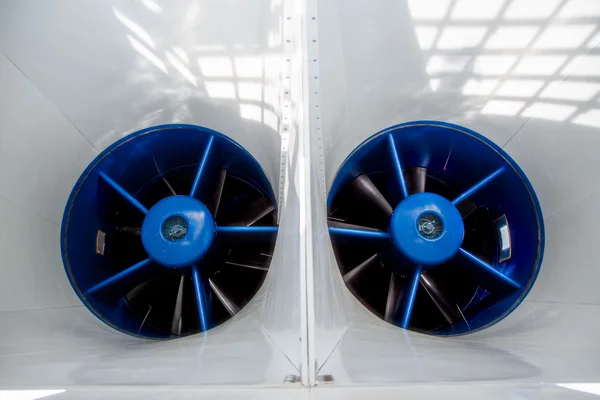
The roaring heart of TunnelTech machines - meticulously calculated and manufactured with pinpoint accuracy. In 16 years and millions of operating hours they showcase a spotless track record with not one part or bearing ever replaced.

  • Strategic alliance with EVG Lufttechnik - 40+ years of aerodynamics expertise
  • Carbon fiber impellers redefine energy efficiency and vibration control
  • Large diameter and low RPM for minimal noise and vibration
  • ABB or Siemens electric motors for 30+ year expected lifespan
  • Complete diagnostic sensors for vibration, temperature, oil level
  • Automatic lubrication and individual frequency converters
Technical Specifications
Blade Material
Carbon Fiber
Motor Brands
ABB / Siemens
Expected Life
30+ years
Track Record
Zero replacements
Axial Fans

FRP Composite Airducts

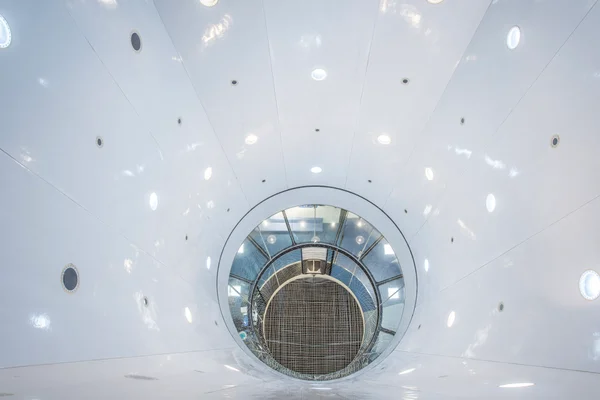
Just like every exceptional sailboat is built around perfect streamlined shape, wind tunnel efficiency relies upon honed aerodynamic lines to guide unobstructed airflow from the motors to the flight chamber and back.

  • Highest degree precision for smooth transitions between tunnel sections
  • Eliminates near-wall turbulence - primary cause of noise and vibration
  • Sandwich structure absorbs sound waves vs. transmitting them
  • No uncontrolled resonance peaks common in conventional air ducts
  • Lowest Darcy-Weißbach Friction Factor (0.185) in the industry
  • Enables installation in demanding locations like shopping centers
Technical Specifications
Material
FRP Composite
Structure
Sandwich Design
Friction Factor
0.185 (lowest)
Installation
Any Location
FRP Composite Airducts

Turning Vanes

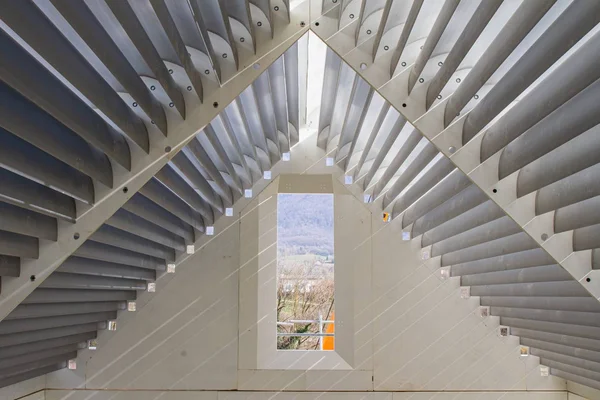
The cornerstone of wind tunnel efficiency. Classic NASA research shows that up to 30% of energy losses in a tunnel may appear due to poor turning vane design, insufficient frequency within vanes assembly and inappropriate mounting.

  • Meticulously calculated profile for optimal airflow guidance
  • Proper frequency within vanes assembly prevents turbulence
  • Appropriate mounting for maximum efficiency
  • Hollow design enables active cooling integration
  • Dramatically affects airflow quality - reducing or inducing turbulence
  • Up to 30% energy savings with proper design
Technical Specifications
Design Basis
NASA Research
Energy Impact
Up to 30%
Cooling
Hollow vane integration
Effect
Turbulence control
Turning Vanes

Passive Cooling (Ventilation)

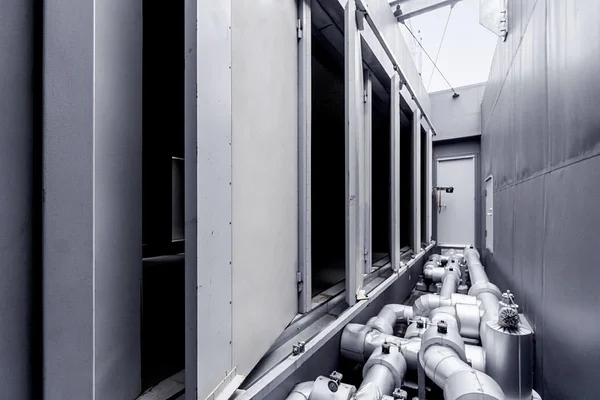
Otherwise known as 'ventilation', passive cooling reduces energy expenses by as much as 30-35%. By exchanging air with atmosphere this approach completely eliminates the need for costly chiller use, their maintenance and associated capital expenses.

  • Replaces up to 20% of circulating airflow with fresh air
  • Effectively cools system in temperatures below 30°C
  • Reduces total energy consumption by up to 30-35%
  • Eliminates need for expensive chiller equipment
  • No chiller maintenance costs
  • Up to 60% less power consumption due to outright ventilation
Technical Specifications
Air Exchange
Up to 20%
Energy Savings
30-35%
Operating Temp
Below 30°C
Chiller Required
No
Passive Cooling (Ventilation)

Active Cooling System

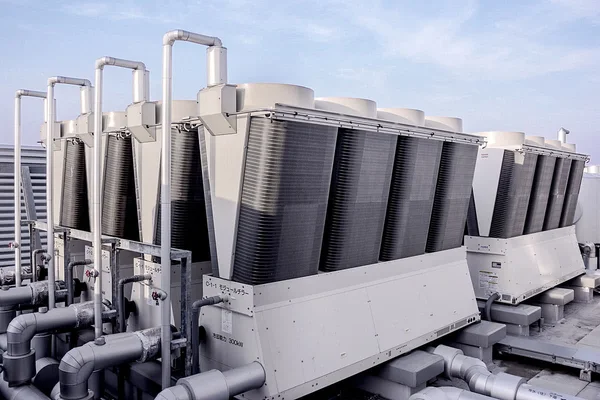
For hot climates and ultra-quiet operation near residential areas - cooling fluid is supplied through hollow turning vanes that act as heat exchangers.

  • Cooling fluid supplied through hollow turning vanes
  • Vanes act as heat exchangers for uniform airflow cooling
  • Eliminates turbulence from traditional cooling methods
  • Enables operation in any extreme climate
  • Noise emissions as low as 51 dBA
  • Allows installation in close proximity to residential areas (30m)
Technical Specifications
Method
Hollow vane heat exchange
Noise Level
51 dBA
Climate
Any extreme
Location
Residential compatible
Active Cooling System

BASE Jumping Chamber

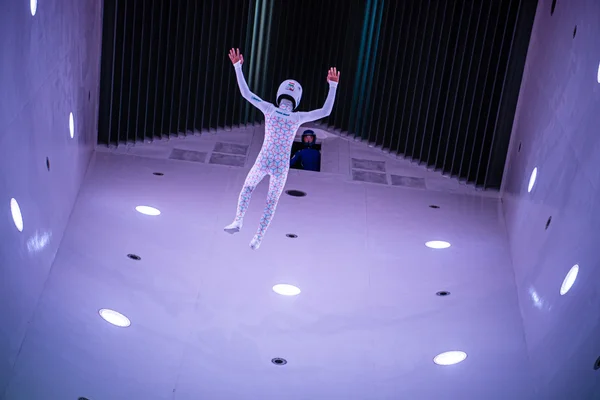
Located at the top of the wind tunnel, the BASE chamber is an indispensable tool for professional parachute training. It provides a secondary entrance to the flight chamber, allowing practice of controlled exits from aircraft in a safe environment.

  • Secondary entrance at the top of the flight chamber for realistic exit training
  • 2x wind speed reduction at the door for safer training conditions
  • Only chamber suitable for training with a stabilizing parachute
  • Significantly increases safety during training sessions
  • Can be designed to resemble an aircraft cabin upon request
  • Full automation and safety systems available
Technical Specifications
Location
Top of wind tunnel
Speed Reduction
2x at door
Training Type
Stabilizing parachute
Customization
Aircraft cabin design
BASE Jumping Chamber
Flight chamber(15)
Upper exit in flight-chamber for pro BASE jump practice.(3)
Confusor(5)
Precision diffusers for optimal pressure recovery(20)
High-efficiency axial fans with carbon fiber blades(23)
Glass panels(9)
Heat release via aerodynamic vents without active power(10)
Passive noise trapping within the sandwich duct design.(8)
Active heat removal for consistent aerodynamic performance.(20)
Installation and assembly of the confuser in the flight chamber of the TT45 Pro wind tunnel. The Confuzor is a critical aerodynamic component that ensures smooth airflow transition into the flight chamber.Installation and assembly of the confuser in the flight chamber of the TT45 Pro wind tunnel. The Confuzor is a critical aerodynamic component that ensures smooth airflow transition into the flight chamber.

Assembly of the confuser in the TT45 Pro flight chamber.

Installation and assembly of the confuser in the flight chamber of the TT45 Pro wind tunnel. The Confuzor is a critical aerodynamic component that ensures smooth airflow transition into the flight chamber.

1 / 15

Installation and assembly of the confuser in the flight chamber of the TT45 Pro wind tunnel. The Confuzor is a critical aerodynamic component that ensures smooth airflow transition into the flight chamber.
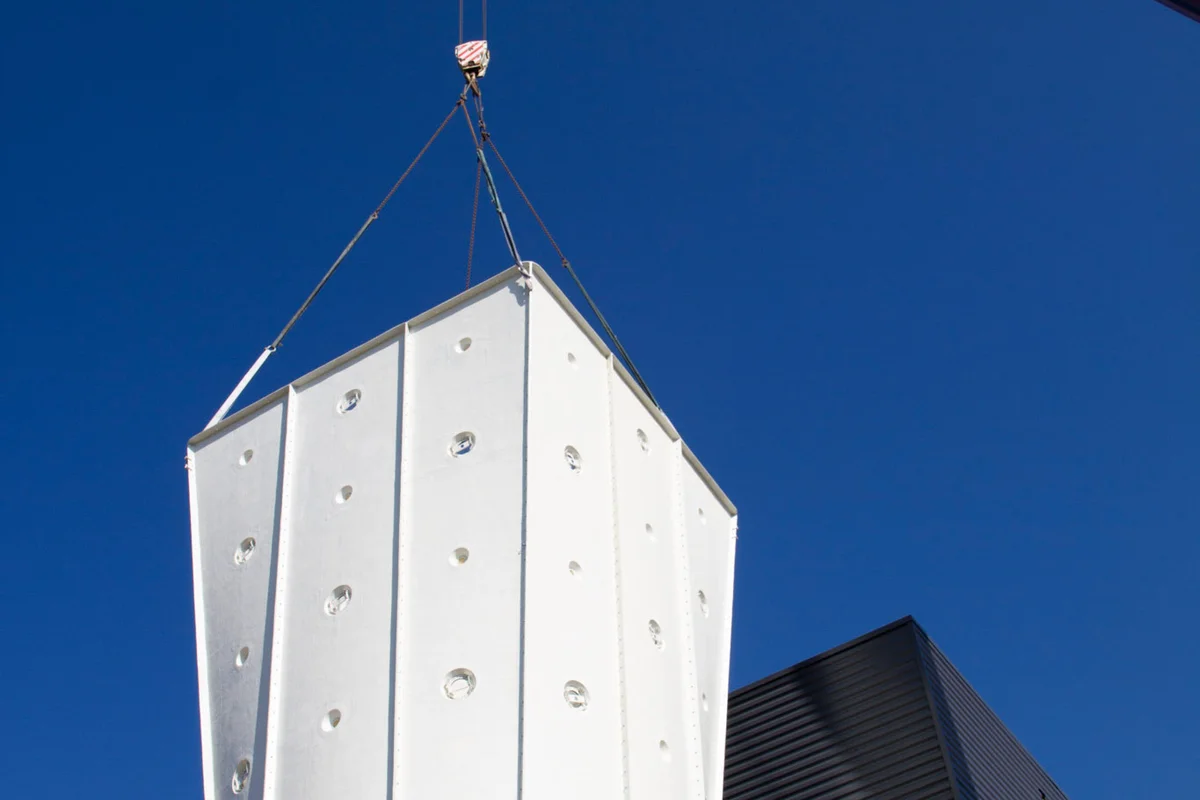
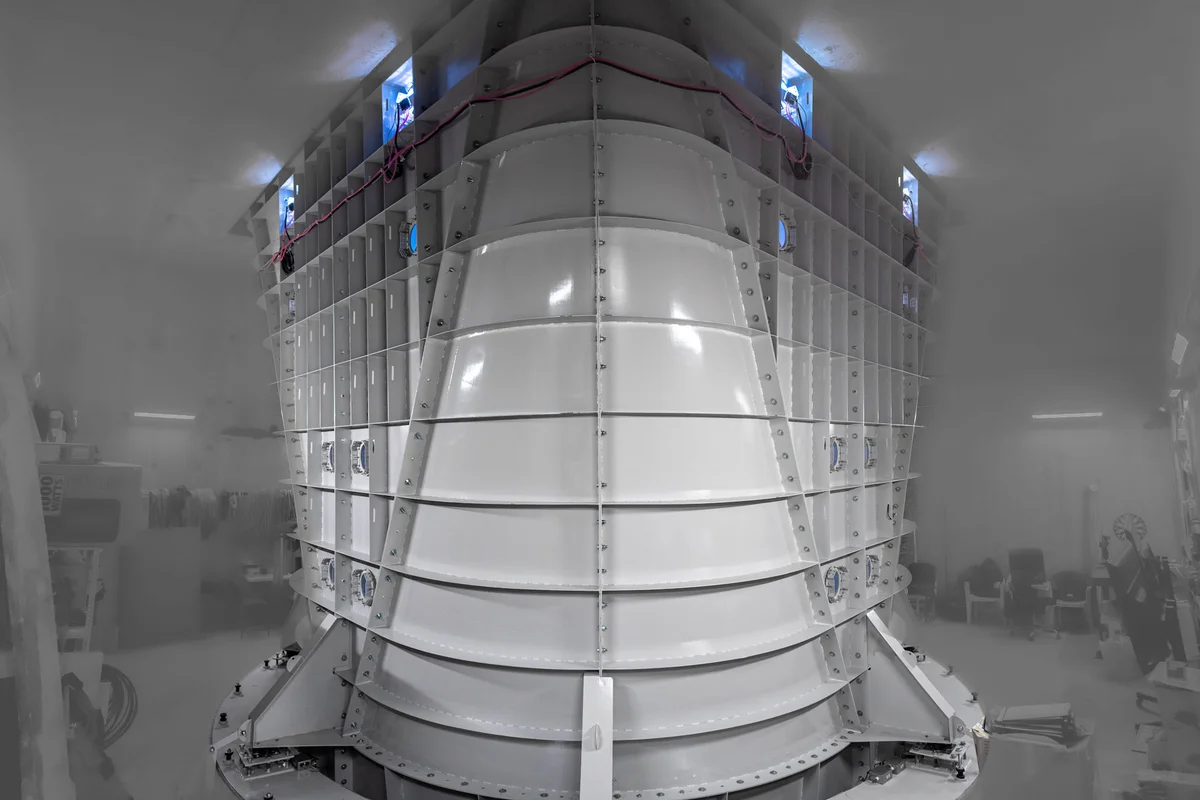
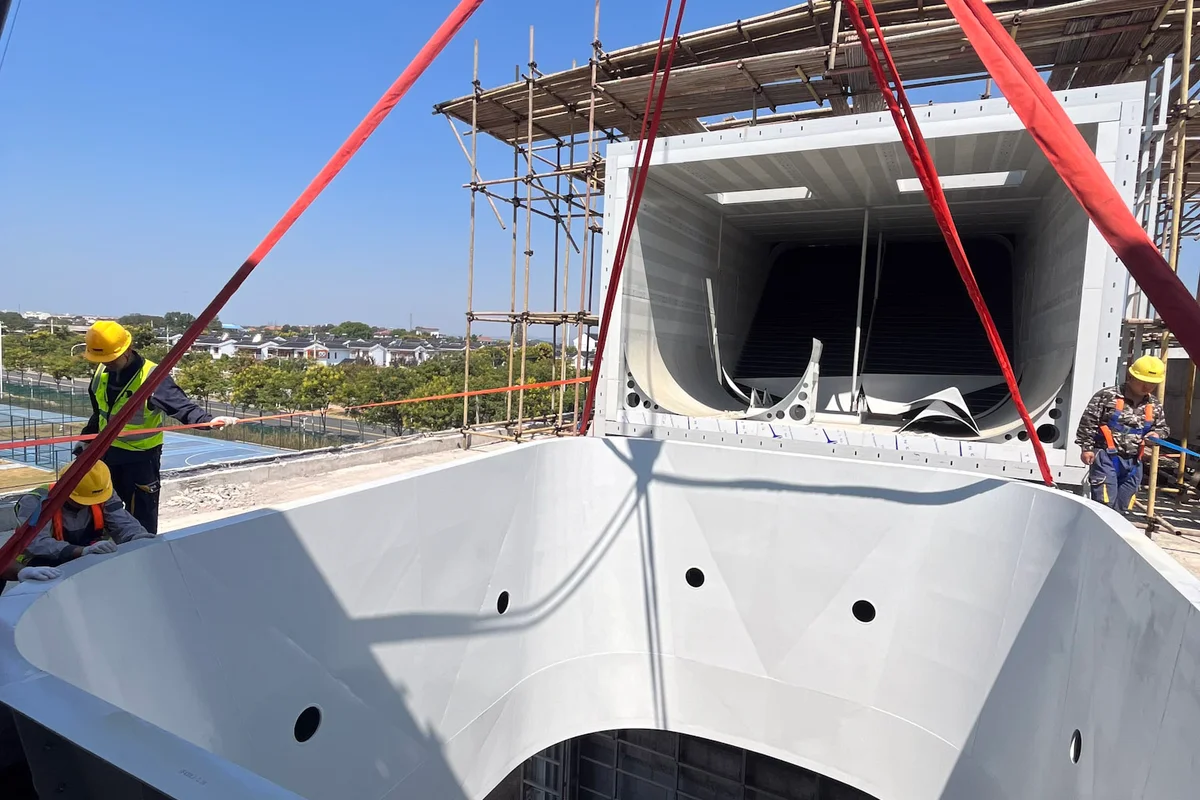
A mobile crane lifts a white, faceted FRP (fiberglass) diffuser segment into position at the Windalps facility in France. This component constitutes the upper section of the flight chamber, situated directly above the glass flying zone. The structure includes distinct circular ports designed for the installation of lighting elements. As part of the recirculating loop, this diffuser expands the airflow cross-section to reduce air velocity as it exits the flight chamber.
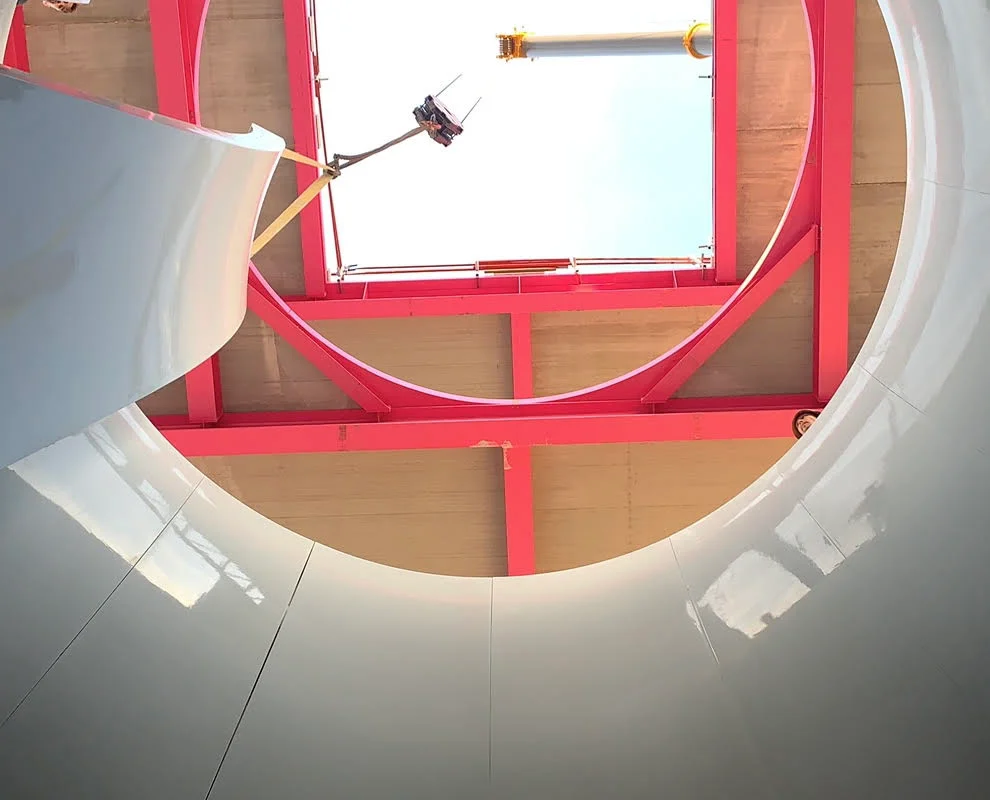
A vertical perspective looking down through the upper diffuser section of a TT45 PRO wind tunnel at the Wind Alps facility. The white paneled walls of the airflow circuit feature circular access ports and lead down to the flight chamber level. Below, rigging chains and blue construction machinery assist in the installation of the glass flight chamber components and steel connection flanges.
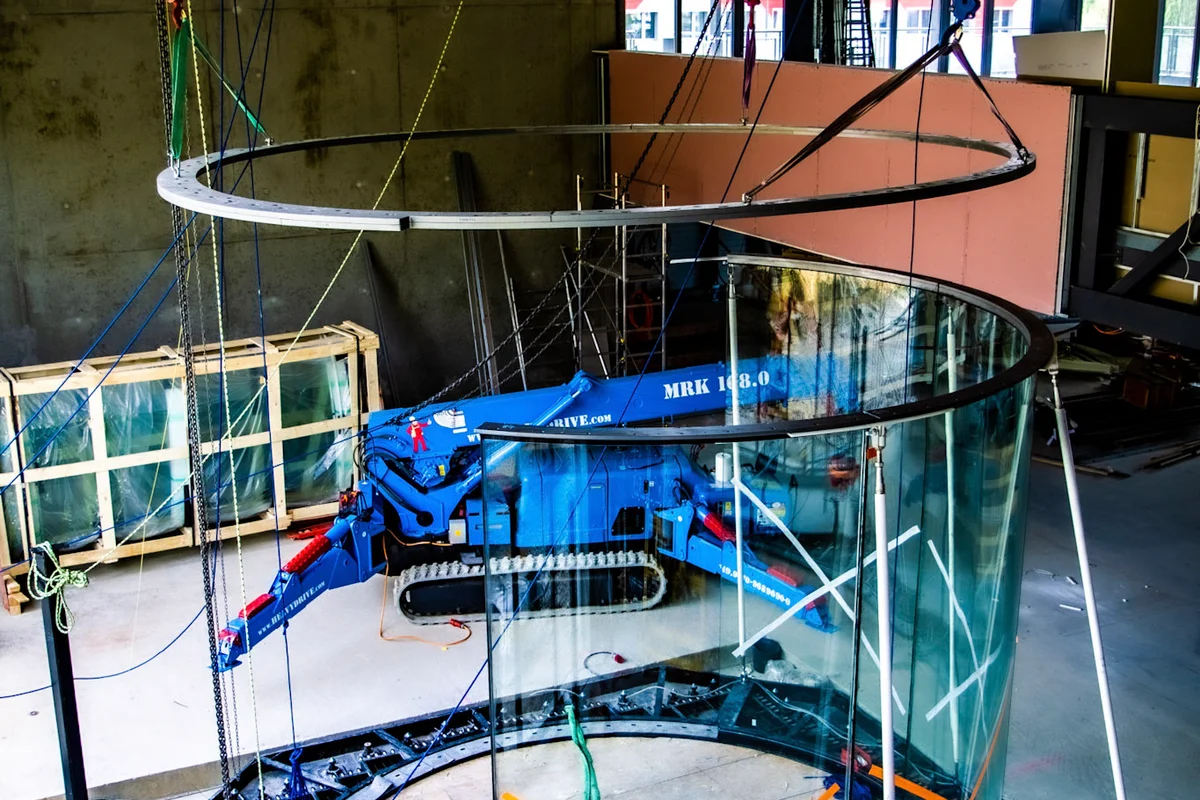
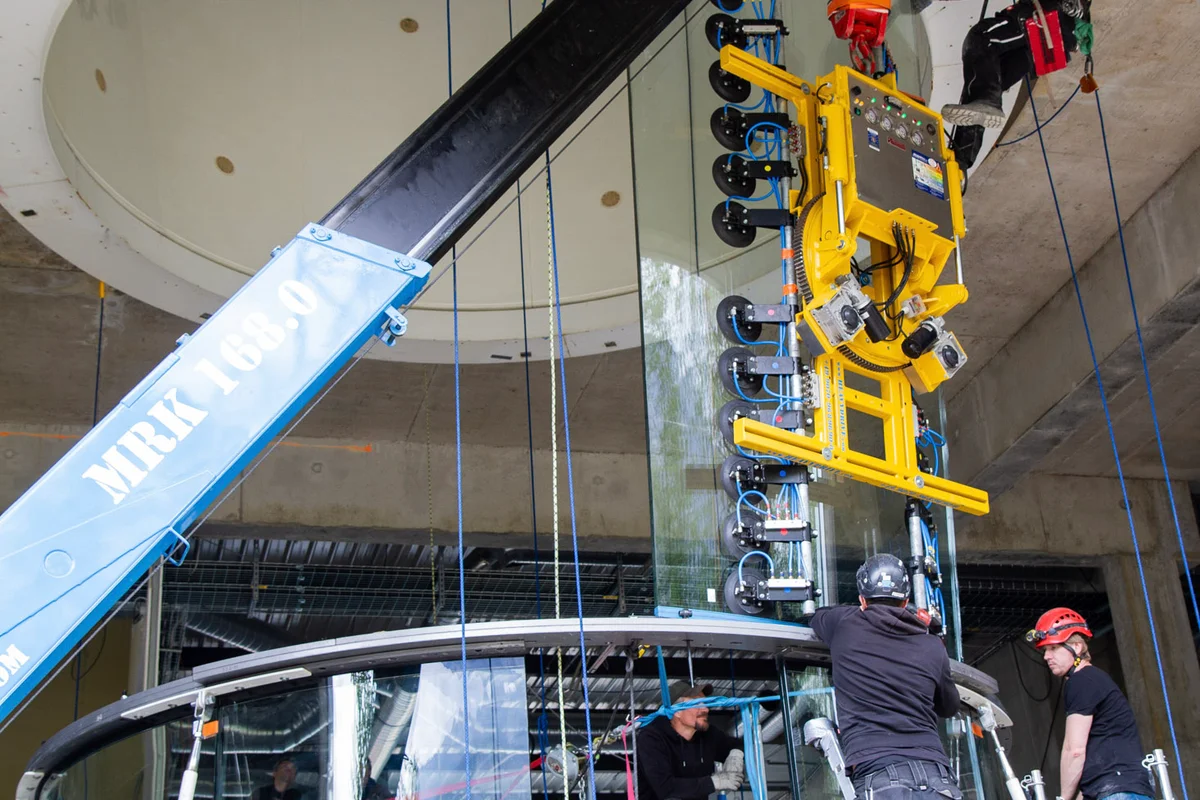
Assembly of the TT45 PRO flight chamber takes place at the Wind Alps facility. A spider crane positions the curved, multilayer glass panels onto the structural steel base to form the round, frameless flying area. Rigging cables suspend the upper metal ring while additional crates containing glass sections sit ready for installation in the background. This construction phase establishes the transparent flight zone characteristic of the TT45 PRO model.
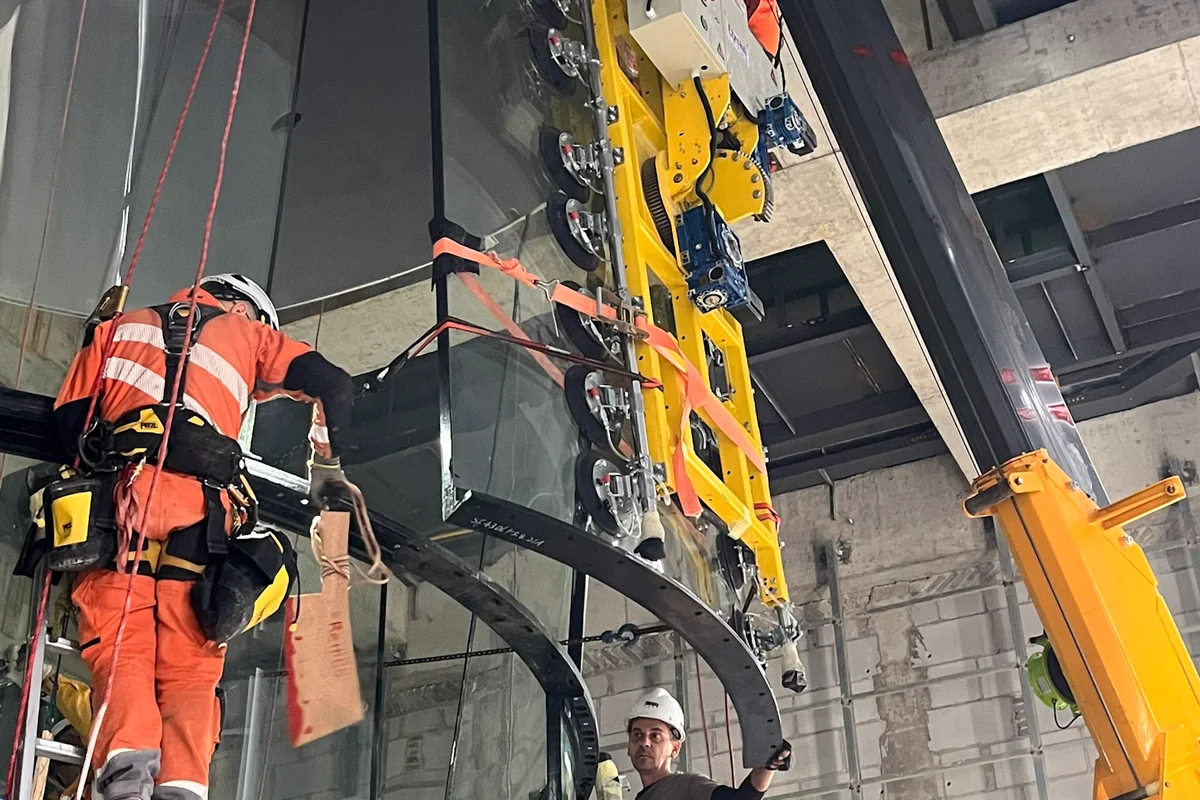
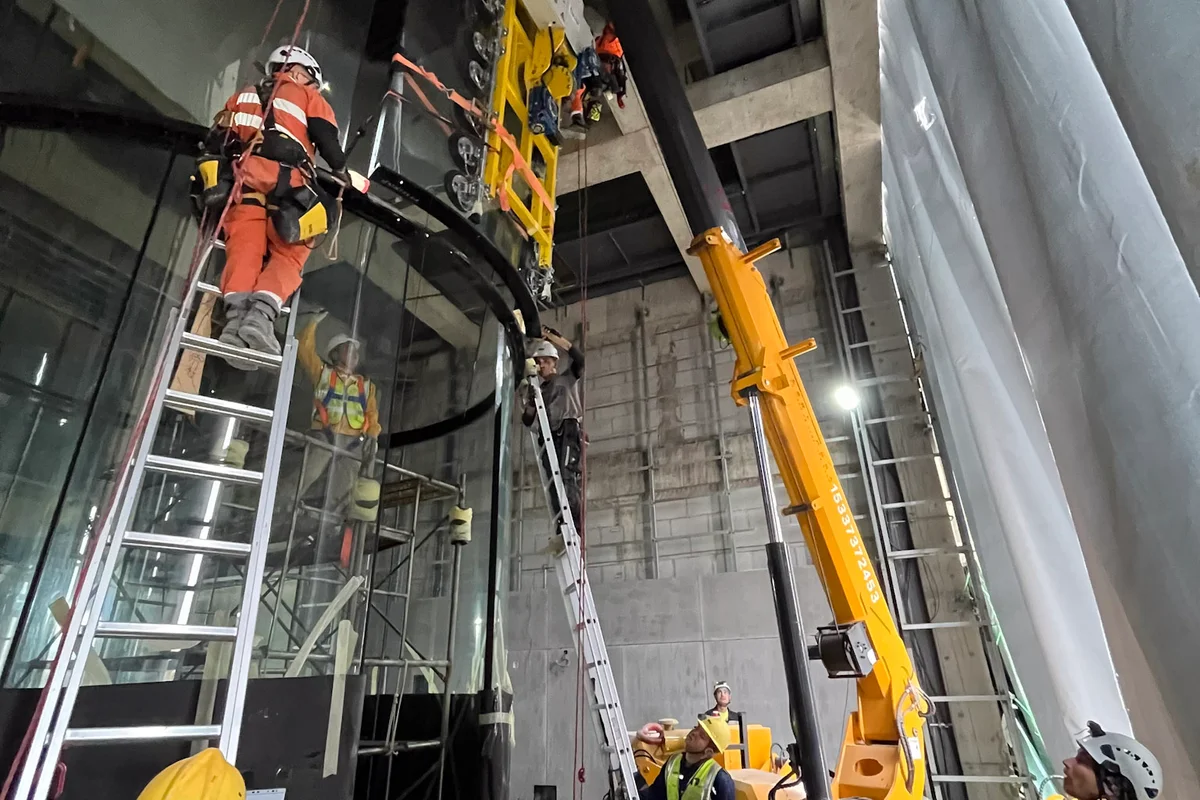
A specialized spider crane equipped with a heavy-duty vacuum lifter positions a large curved glass panel for the TT45 PRO flight chamber. Industrial climbers suspended from the upper concrete ring guide the multilayer noise-absorbing glass into the steel framing, while technicians on scaffolding align the base. This assembly process at the Wind Alps facility in France constructs the transparent, cylindrical flying area of the recirculating wind tunnel.
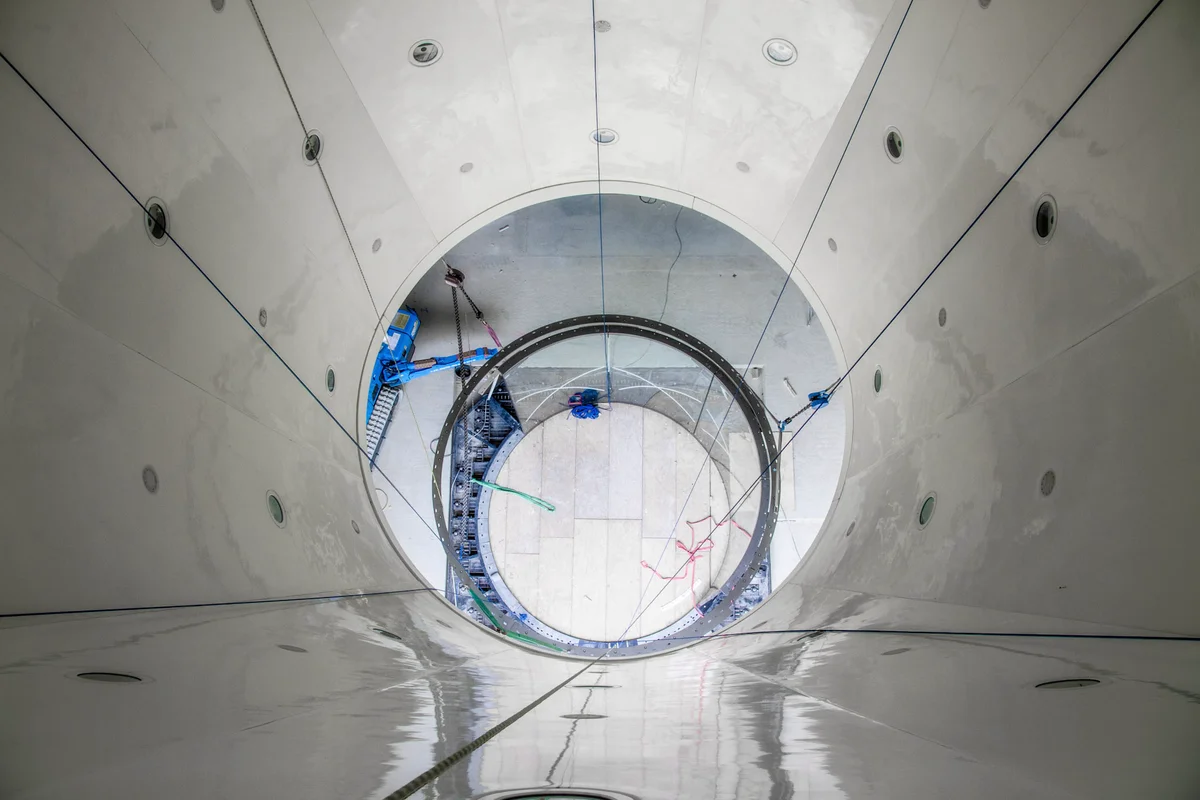
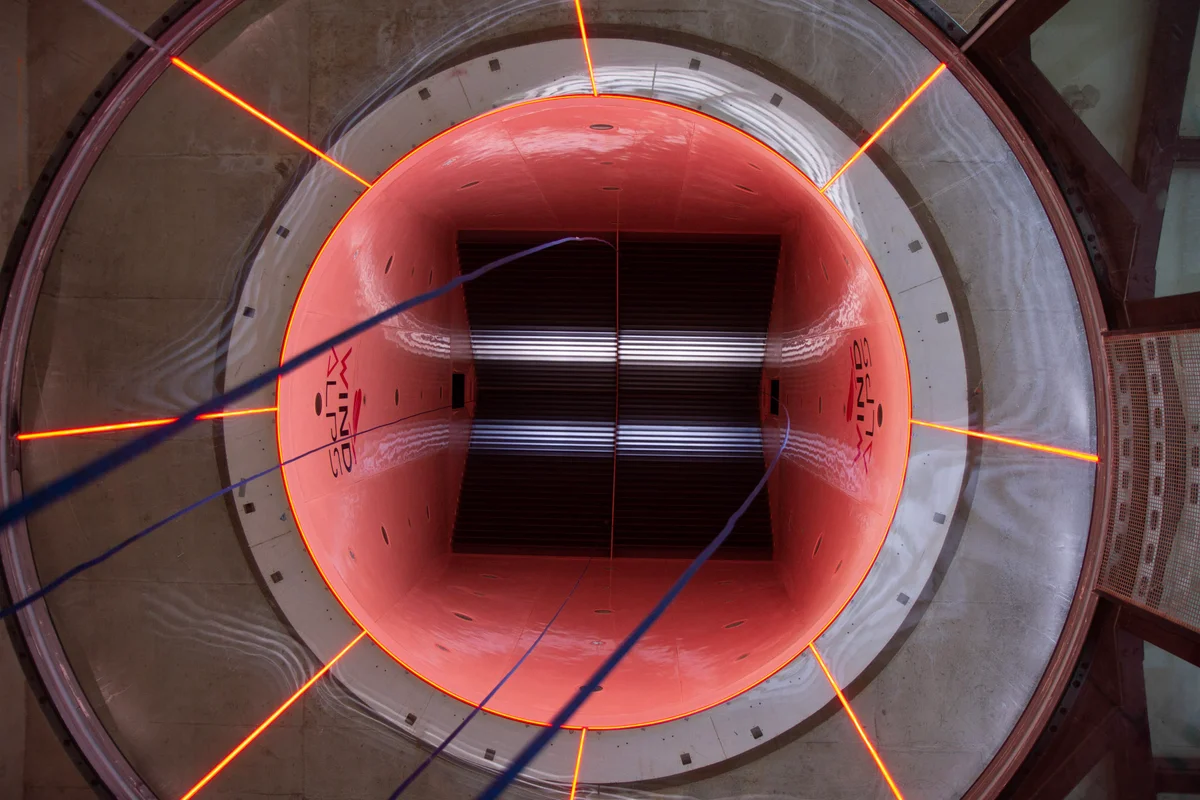
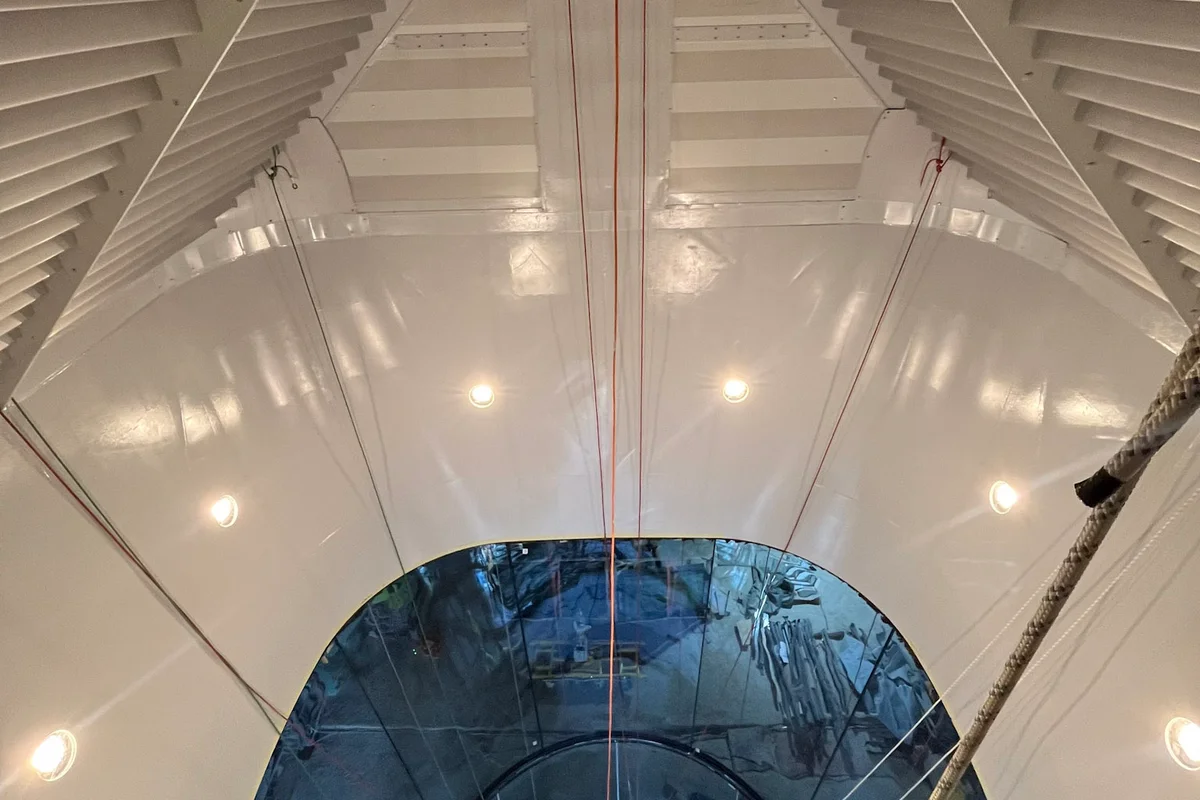
A vertical view looking up through the aerodynamic circuit at the Wind Alps facility in France during the installation phase. The image shows the transition from the circular section to the upper duct corner, where horizontal turning vanes are positioned to redirect airflow. Blue rigging ropes hang through the center, used for rope access during the assembly of this TT45 PRO wind tunnel. The interior walls display Wind Alps branding and radial LED lighting strips integrated into the structure.
Our installation team is positioning a massive curved glass panel for the TT45 PRO wind tunnel at the Brimob facility in Indonesia. Using a specialized heavy-duty vacuum lifter, the technicians carefully guide the multilayer glass section into place above the safety net. This 4.5-meter diameter flight chamber is built with chemically strengthened glass, ensuring both maximum impact safety and perfect optical clarity for professional training.
The image captures the installation of the steel diffuser assembly for a TunnelTech TT52 Pro wind tunnel at the Kuzbas Arena facility. This expanding duct component sits directly above the flight chamber to decelerate airflow and recover pressure within the recirculating loop. The structure features segmented white steel panels with external structural ribbing and bolted flange connections, forming the upper transition section of the 5.2-meter diameter vertical airflow circuit.
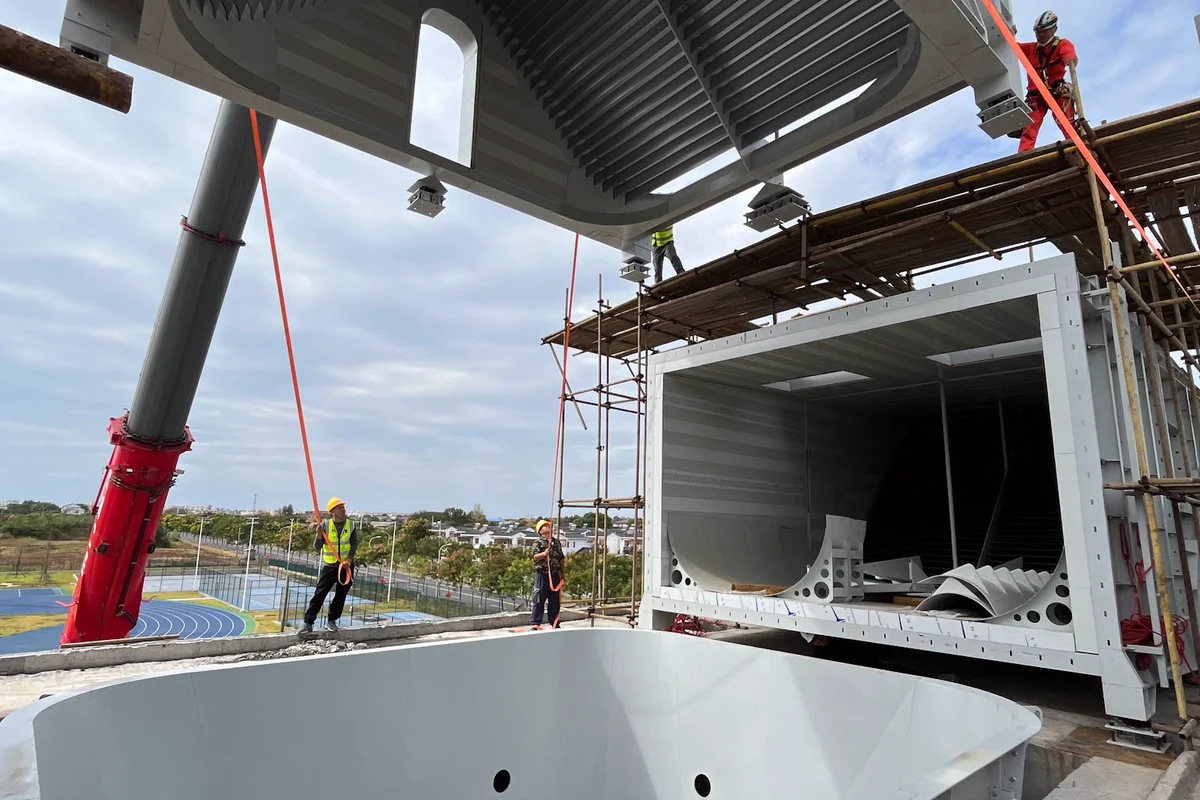
Installation of the TT43 Smart wind tunnel at China Flight Town proceeds with the lifting of a flight chamber diffuser section. The white component features a circular aperture that connects to the flight area. In the background, a horizontal return duct section equipped with black turning vanes rests on the structural steel scaffolding. Construction personnel manage the rigging straps to align the heavy aerodynamic segment.
A crane lowers the upper section of the flight chamber containing turning vanes during the installation of the SmartFly 4.3 wind tunnel at China Flight Town. This component functions as a flow splitter for the double-loop configuration, dividing the vertical airflow into two separate paths: one directing air to the return duct in the foreground and the other to the rear. Workers on scaffolding guide the steel structure into position above the plenum base.
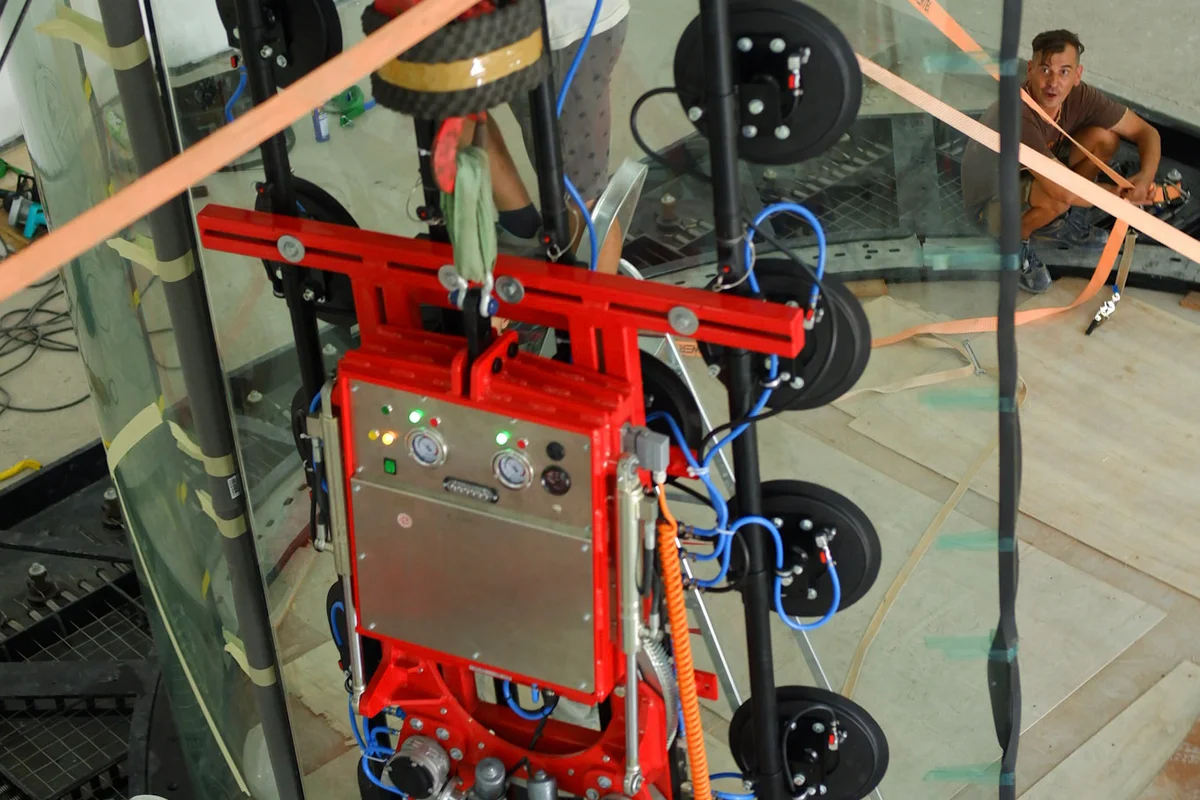
Technicians install a curved glass panel for the flight chamber of a TT43 Smart wind tunnel at the China Flight Town project. A heavy-duty vacuum lifter attached to a crane positions the multilayer noise-absorbing glass section into the steel framework. The installation team utilizes rope access techniques and ladders to align the chemically strengthened glass, ensuring precise fitment for the 4.3-meter diameter flight area.
TunnelTech technicians install curved multilayer glass panels for a TT43 Smart wind tunnel flight chamber at the China Flight Town facility. A spider crane equipped with a vacuum lifter positions the heavy glass segment while a team utilizes rope access and ladders for precise alignment. The installation process assembles the 4.3-meter diameter cylindrical flight chamber, utilizing chemically strengthened glass to ensure structural safety and consistent airflow aerodynamics.
This vertical perspective looks down from the upper return duct into the flight chamber of a TT43 Smart wind tunnel at the China Flight Town facility. Rows of aerodynamic turning vanes line the upper corners to guide airflow and reduce turbulence. Below the vane section, the white diffuser walls transition into the 4.3-meter diameter glass flight chamber. Rigging ropes and ladders visible inside the structure indicate the ongoing installation process of the mechanical and structural components.
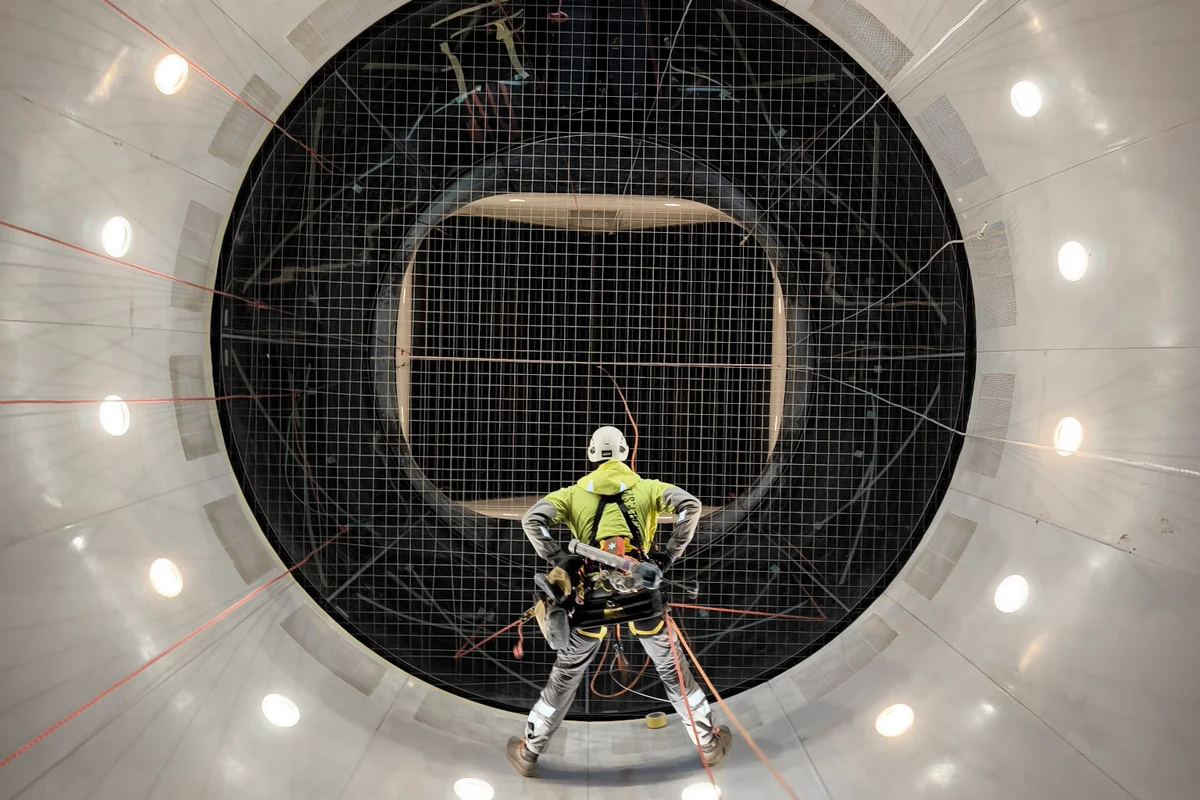
A rope access engineer is suspended beneath the safety net, performing installation work on the contraction section (confusor). The perspective looks upward through the steel cable net and the flight chamber, providing a view of the turning vanes at the top of the loop. The technician is positioned within the white composite contraction cone, utilizing rigging to access the surface below the flight deck.
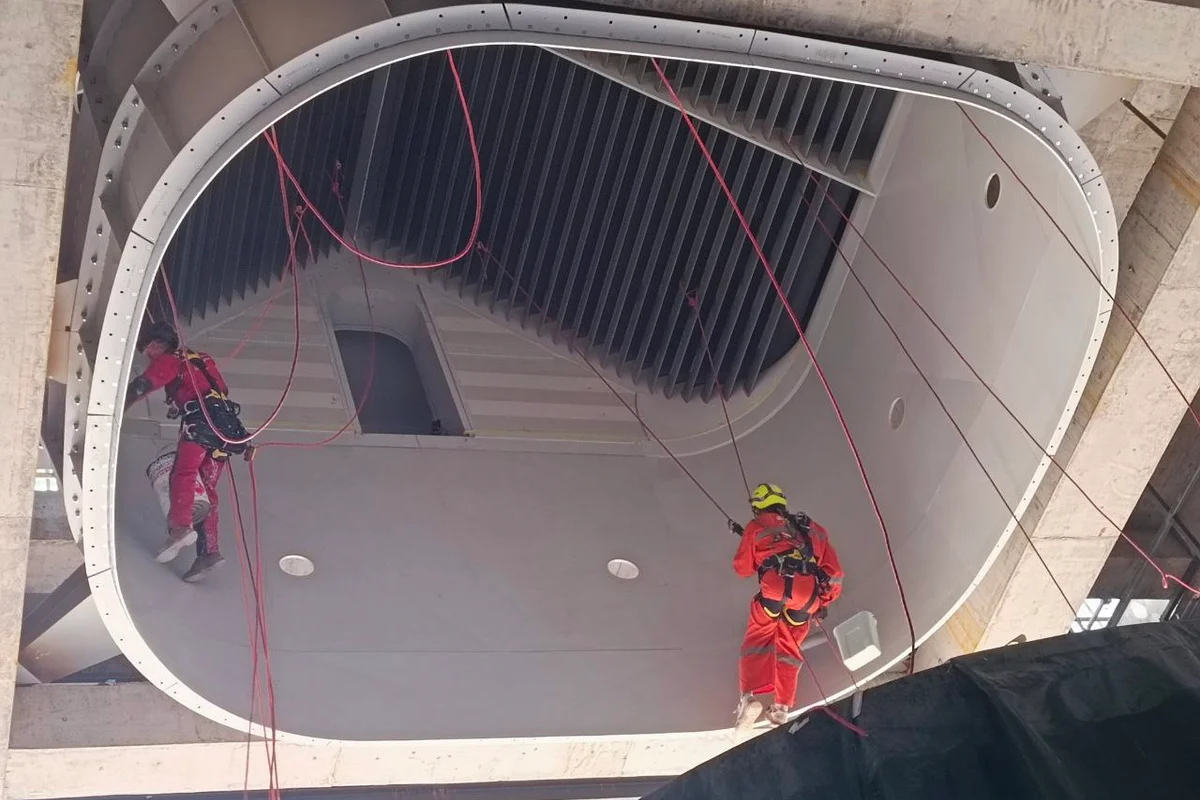
Technicians perform rope access installation in the upper section of the flight chamber for the TT43 Smart wind tunnel at China Flight Town. The image displays the white composite structure featuring circular cutouts designed for the installation of lighting sources. Above the workers, a rectangular door provides access to the BASE jumping chamber. At the top of the section, turning vanes are arranged in a V-shape configuration to split the airflow into the left and right return ducts.