ზესწრაფი FPV დრონების ტესტირება: რა იცვლება 300–400 km/h სიჩქარეზე
რატომ სჭირდებათ 300–400 km/h სიჩქარის FPV დრონებს ქარის გვირაბი: კუმშვადობა ფრთების ბოლოებზე, სიმძლავრის ზრდა სიჩქარის კუბით, დატვირთვები და რატომ ვერ უმკლავდება მატრიცა.
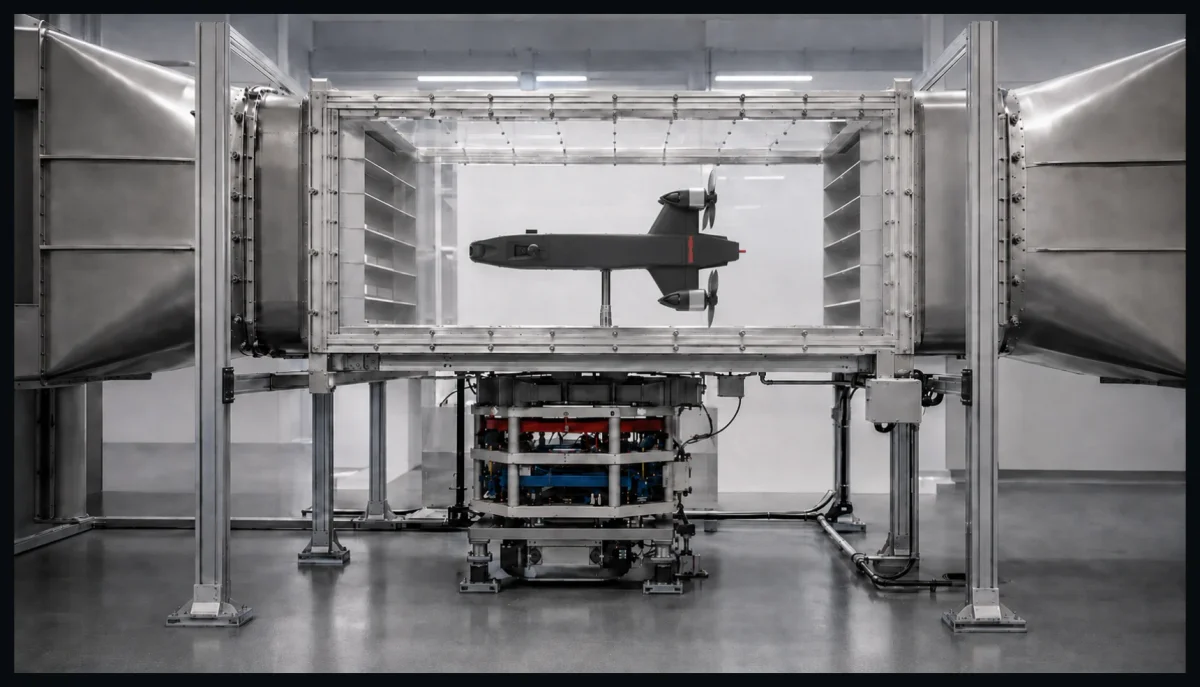
სამასი-ოთხასი კილომეტრი საათში ჟღერს, როგორც სიჩქარის დიაპაზონი დიდი მარაგით, სანამ რაიმე აეროდინამიკურად საინტერესო დაიწყება — ბგერის სიჩქარეზე საგრძნობლად დაბალი, დამაჯერებლად იმ ტერიტორიის შიგნით, რომელსაც ნებისმიერი სახელმძღვანელო „დაბალსიჩქარიან არაკუმშვად ნაკადს“ უწოდებს. მთლიანობაში პლანერისთვის ეს ძირითადად სიმართლეა. მის წინ მბრუნავი პროპელერისთვის — არა.
ზესწრაფი FPV დრონების ტესტირება არსებობს იმიტომ, რომ მცირე როტორული უპილოტო საფრენი აპარატების ყველაზე სწრაფად მზარდი სეგმენტი — სარბოლო დრონები და, სულ უფრო ხშირად, გზაგადამჭრელი დრონები, რომლებიც სხვა აპარატების დასაწევად არის აგებული — ჩუმად გასცდა იმ დაშვებების ფარგლებს, რომლებსაც დღემდე ეყრდნობა მცირე დრონების დანარჩენი შემუშავება.
1. ფრთის ბოლო — აი, სად წყვეტს „ქვებგერითი“ მარტივად ყოფნას
დრონის წინსვლის სიჩქარე და პროპელერის ფრთის ბოლოს სიჩქარე — ორი სხვადასხვა რიცხვია, და მეორე ყოველთვის მეტია, ხშირად დიდი მარაგით. სარბოლო FPV პროპელერები ჩვეულებრივ ბრუნავს 25 000–50 000+ ბრ/წთ სიჩქარით, ხოლო ყველაზე სწრაფი აწყობები სრული გაზის დროს 60 000 ბრ/წთ-ს აჭარბებს.
წარმოვიდგინოთ ტიპური 5-დიუმიანი სარბოლო პროპელერი (დიამეტრი 127 mm, ფრთის რადიუსი 63,5 mm) 50 000 ბრ/წთ-ზე: ფრთის ბოლოს სიჩქარე მხოლოდ ბრუნვისგან გამოდის დაახლოებით 330 m/s — ზღვის დონეზე ბგერის სიჩქარის რამდენიმე პროცენტის ფარგლებში. დაუმატეთ აპარატის საკუთარი სიჩქარე 300–400 km/h (83–111 m/s), რომელიც პირდაპირ ემატება დისკის შემტევ მხარეს, როგორც ნებისმიერი როტორის შემთხვევაში ჰორიზონტალური ფრენისას, — და ლოკალური ნაკადი, რომელსაც რეალურად ხედავს შემტევი ფრთის ბოლო, უარეს შემთხვევაში შეიძლება აღემატებოდეს მახის რიცხვ 1-ს, ხოლო საუკეთესო შემთხვევაში მაინც ღრმად ტრანსბგერით არეალში აღმოჩნდება.
ეს მნიშვნელოვანია, რადგან პროპელერის მქკ არ დეგრადირდება მდორედ ლოკალური მახის რიცხვის ზრდასთან ერთად ტრანსბგერით დიაპაზონში — ის ინგრევა, კარგად ცნობილი აეროდინამიკური ეფექტის გამო, რომელიც ნაცნობია პროპელერის ან როტორის ნებისმიერი კონსტრუქციისთვის: ნახტომისებრი ტალღების წარმოქმნა ფრთაზე, აეროდინამიკური წინააღმდეგობის მკვეთრი ზრდა და ხმაურის ნახტომისებრი მატება, რაც კონცენტრირებულია ფრთის ბოლო რამდენიმე სანტიმეტრზე, რომლებიც გაცილებით რბილი ნაკადის რეჟიმისთვისაა დაპროექტებული.
2. აეროდინამიკური წინააღმდეგობა აღარ მასშტაბირდება ისე, როგორც სამოყვარულო სიჩქარეებზე
აეროდინამიკური წინააღმდეგობის დასაძლევად საჭირო სიმძლავრე იზრდება სიჩქარის კუბის პროპორციულად. მშვიდი 100 km/h-დან 400 km/h-ზე გადასვლა — ეს არის სიჩქარის 4-ჯერ ზრდა, ხოლო მოთხოვნილი სიმძლავრის ზრდა მხოლოდ წინააღმდეგობის დასაძლევად, მანამ სანამ ძალური დანადგარი სხვა რამეს გააკეთებს, — 64-ჯერ . კონსტრუქციის ყველა დაშვება, რომელიც მუშაობდა საოპერატორო ან სადისტრიბუციო დრონების სიჩქარეებზე — ძრავის ზომა, ბატარეის C-რეიტინგი, სითბური მარაგი, კონსტრუქციული დატვირთვები, რომლებიც გათვლილია ფრენის „ნორმალურ“ სიჩქარეზე, — აგებული იყო ამ მრუდის სრულიად სხვა წერტილისთვის.
საოპერატორო და სატვირთო პლატფორმები, რომლებზეც ჯერ კიდევ არის მიმართული FPV-ს შემუშავების დიდი ნაწილი, დაფრინავენ 0–100 km/h სიჩქარით. მრუდის ამ კიდეზე აეროდინამიკური წინააღმდეგობა — მეორეხარისხოვანი საზრუნავია მასისა და დაკიდების მქკ-ს შემდეგ. 300–400 km/h-ზე ის მთავარი ხდება.
3. დატვირთვები იზრდება სიჩქარის კვადრატის პროპორციულად, კონსტრუქციაზე, რომელიც ამისთვის არ არის გათვლილი
დინამიკური წნევა — სიდიდე, რომელიც განსაზღვრავს აეროდინამიკურ დატვირთვებს ჩარჩოზე, მკლავებსა და ფიუზელაჟზე, — იზრდება სიჩქარის კვადრატის პროპორციულად. სარბოლო პლანერი, რომელიც აგებულია 3D-პრინტერზე დაბეჭდილი პლასტმასისა და კარბონისგან მინიმალური წონის და არა დატვირთვის მარაგის გამო, 400 km/h-ზე განიცდის დაახლოებით 16-ჯერ მეტ აეროდინამიკურ დატვირთვას , ვიდრე 100 km/h-ზე. ეს დატვირთვა მოდის მკლავებზე, ძრავების სამაგრებსა და ფიუზელაჟზე, რომლებიც ოპტიმიზებულია იმისთვის, რომ იყოს იმდენად მსუბუქი, რამდენის საშუალებასაც ჩარჩო იძლევა, და არა იმისთვის, რომ გაუძლოს დატვირთვის შემთხვევას, რომელიც ოთხჯერ აღემატება იმ სიჩქარეს, რისთვისაც პლატფორმა საერთოდ იტესტებოდა დაპროექტებისას.
ისინი, ვინც უკვე ითვისებენ ამ დიაპაზონს, ამას პასუხობენ იმით, რომ მთელ პლანერს ექცევიან როგორც აეროდინამიკურ ამოცანას, და არა მხოლოდ ძალურ დანადგარს. კვადროკოპტერის სიჩქარის მოქმედი გინესის მსოფლიო რეკორდი — 657,59 km/h, რომელიც დამყარდა სპეციალურად აგებულ მანქანაზე 6-დიუმიანი პროპელერებით, 900 kV-იანი ფორსირებული ძრავებით და კორპუსით, რომელიც 3D-პრინტერზე ერთი მთლიანი დეტალის სახით დაიბეჭდა, — მუშავდებოდა გარე ფორმით, რომელიც ოპტიმიზებული იყო აეროდინამიკურ მოდელირებაში სწორედ წინააღმდეგობის შესამცირებლად, და არა მხოლოდ სწრაფი იერსახისთვის.
4. რატომ არსებობს ეს სეგმენტი კომერციულად, და არა მხოლოდ როგორც სარეკორდო გაფრენა
ყველაზე აშკარა რეალური მამოძრავებელი ძალა — თავდაცვითია: უკრაინული FPV გზაგადამჭრელი დრონები, რომლებიც აგებულია მზვერავი დრონების დასაწევად და გასანადგურებლად, საჯაროდ იტყობინებოდნენ დაახლოებით 325 km/h სიჩქარის შესახებ. ლოგიკა პირდაპირია: ტიპური მზვერავი პლატფორმა, რომელიც კრეისერული რეჟიმით დაფრინავს დაახლოებით 110 km/h-ით და აქვს მაქსიმალური სიჩქარე დაახლოებით 150 km/h, უნდა იქნას დაწეული მანამ, სანამ გზაგადამჭრელს ბატარეა დაუჯდება, და გზაგადამჭრელის სიჩქარის ყოველი ზედმეტი km/h პირდაპირ ამცირებს ამ დევნას. ეს არ არის ნიშური სამოყვარულო გატაცება — ეს არის აქტიური, სწრაფად განვითარებადი კატეგორია, რომლის უკანაც მახასიათებლების მიმართ მკაცრი მოთხოვნები დგას.
5. რატომ არ შეუძლია ვენტილატორების მატრიცას ფიზიკურად ამ სეგმენტის ტესტირება
ვენტილატორების მატრიცის კომერციული ჭერი — დაახლოებით 58 m/s, დაახლოებით 209 km/h -ია, — დამონტაჟებული შეკუმშვის მონაკვეთითაც (კონტრაქციით) კი, რომელიც ნაკადის კონცენტრირებას ახდენს. ეს ოდნავ მეტია იმის ნახევარზე, რაც სჭირდება გზაგადამჭრელს 300–400 km/h-ზე. საქმე ის კი არ არის, რომ მატრიცა უფრო იაფია ან ნაკლებად ქმედუნარიანი; დაახლოებით 200 km/h-ის ზემოთ ეს საერთოდ არ არის ვარიანტი. დახურული კონტურის ქარის გვირაბი, რომელიც გათვლილია გაუძლოს მაღალ დინამიკურ წნევას მცირე, კარგად კონდიცირებულ სატესტო მონაკვეთში, — ერთადერთი კლასის სტენდია, რომელიც აღწევს სიჩქარეების ამ დიაპაზონს ნაკადის ისეთი ხარისხით, რაც საკმარისია ვარგისი მონაცემებისთვის.
6. რა სჭირდება რეალურად სატესტო კამპანიას ამ სიჩქარეზე
- სასწორი, რომელიც გათვლილია დატვირთვაზე, და არა მხოლოდ წონაზე. სარბოლო პლანერი მსუბუქია, მაგრამ მასზე მოქმედი აეროდინამიკური დატვირთვები 400 km/h-ზე — არა; სასწორსა და სამაგრს სჭირდება მარაგი დინამიკური წნევის მიხედვით, და არა მხოლოდ სტატიკური წონის მიხედვით.
- პროპელერის მახასიათებლების რუკა ფრენის რეალურ სიჩქარეზე, და არა სტენდიდან ექსტრაპოლირებული. წინსვლის კოეფიციენტისა და ფრთების ბოლოებზე კუმშვადობის ეფექტები ვლინდება მხოლოდ მაშინ, როდესაც პროპელერი რეალურად დგას 300–400 km/h ნაკადში, რისი რეპროდუცირებაც მაგიდაზე არსებულ წევის სტენდს არ შეუძლია.
- კონსტრუქციისა და ვიბრაციის მონიტორინგი ძალურ მონაცემებთან პარალელურად. ასეთი დინამიკური წნევის დროს მკლავისა და ფიუზელაჟის ფლატერი — რეალური, და არა თეორიული გაუმართაობაა, და ის უნდა ჩაიდოს ტესტირების გეგმაში ხელსაწყოებით, და არა აღმოჩნდეს დეტალის გატეხვის ფაქტის შემდეგ.
- ტემპერატურისა და დენის მონიტორინგი ხანგრძლივი მაღალი სიმძლავრის დროს. 100-დან 400 km/h-ზე გადასვლისას სიმძლავრის 64-ჯერ გაზრდის ჯარიმა სადღაც უნდა წავიდეს, და ძრავისა და რეგულატორის სითბური ზღვრები ხშირად ხდება პრაქტიკული ჭერი მდგრადი სიჩქარისთვის, და არა მხოლოდ თავისთავად აეროდინამიკა.
- საკმარისად მცირე ბიჯი სიჩქარის მიხედვით, რათა დავიჭიროთ კუმშვადობის „მუხლი“ , და არა იშვიათი წერტილები, რომელთა შორისაც შეიძლება გაძვრეს სწორედ ის სიჩქარე, სადაც პროპელერის მქკ იწყებს მკვეთრ ვარდნას.
7. რას ნიშნავს ეს თქვენი პროგრამისთვის
გვითხარით მიზნობრივი სიჩქარე და პროპელერის კლასი — ჩვენ დავაპროექტებთ სატესტო მონაკვეთს და ხელსაწყოების პაკეტს სიჩქარეების ამ დიაპაზონისთვის, და არა ადაპტირებულს იმ სტენდიდან, რომელიც გათვლილია უფრო ნელ პლატფორმებზე. მომიჯნავე მასალები:
вентиляторная матрица против замкнутой трубыდა
стенды тяги винтомоторной группы.
წყაროები და შენიშვნები
- სარბოლო FPV პროპელერების ბრუნვის დიაპაზონები (25 000–50 000 ბრ/წთ ნორმალურ რეჟიმში, 35 000–60 000+ ბრ/წთ მაქსიმალურ გაზზე 5-დიუმიანი სარბოლო პროპელერებისთვის): How Fast Do Drone Propellers Spin? RPM Ranges Explained, DroneNestle.
- ფრთის ბოლოს სიჩქარე 50 000 ბრ/წთ-ზე 5-დიუმიანი (127 mm) პროპელერისთვის, გამოთვლილი როგორც რადიუსი × კუთხური სიჩქარე ზღვის დონეზე ბგერის სიჩქარის (~340 m/s) წინააღმდეგ, — TunnelTech-ის საკუთარი ილუსტრაციული გაანგარიშებაა ზემოთ მოყვანილი ბრუნვის ციფრების მიხედვით, და არა ციტატა პუბლიკაციიდან.
- აეროდინამიკური მოდელირების დაშვებები (წევა და წინააღმდეგობის მომენტი პროპორციულია ბრუნვის კვადრატის), რომლებიც წყვეტენ მუშაობას სარბოლო სიჩქარეებზე, და გაუთვალისწინებელი ეფექტები (როტორის წრფივი წინააღმდეგობა, დინამიკური ამწევი ძალა, ურთიერთქმედება როტორი-როტორი და როტორი-კორპუსი, კორპუსის აეროდინამიკური წინააღმდეგობა): Hanover, D., Loquercio, A., Bauersfeld, L., Romero, A., Penicka, R., Song, Y., Cioffi, G., Kaufmann, E., Scaramuzza, D., «Autonomous Drone Racing: A Survey», IEEE Transactions on Robotics, ტომი 40, 2024 (arXiv:2301.01755), სადაც მითითებულია, რომ სარბოლო სიჩქარეები და აჩქარებები „აღემატება 80 km/h-ს და 4g-ს“.
- კვადროკოპტერის სიჩქარის მოქმედი გინესის მსოფლიო რეკორდი (657,59 km/h, Peregreen V4, Luke და Mike Bell), ტექნიკური დეტალები (6-დიუმიანი პროპელერები, 900 kV-იანი ძრავები, 3D-პრინტერზე მთლიანად დაბეჭდილი კორპუსი, აეროდინამიკური ფორმის ოპტიმიზაცია მოდელირებაში): «Watch: World's fastest drone hits 408 mph to reclaim speed record», New Atlas.
- უკრაინული FPV გზაგადამჭრელი დრონის სიჩქარის რეკორდი (დაახლოებით 325 km/h, Wild Hornets, გამოცხადდა 2024 წლის სექტემბერში) და საექსპლუატაციო დასაბუთება მზვერავი დრონების წინააღმდეგ, რომლებიც კრეისერული რეჟიმით დაფრინავენ დაახლოებით 110 km/h-ით და აქვთ მაქსიმალური სიჩქარე დაახლოებით 150 km/h: Defence Express, «325 km/h: While Ukraine Breaks New Speed Record For Armed FPV Drone...».
- ვენტილატორების მატრიცის სიჩქარის კომერციული ჭერი (~58 m/s / ~209 km/h შეკუმშვის მონაკვეთით) შეთანხმებულია ჩვენს გამოქვეყნებულ სტატიასთან, რომელიც ადარებს ვენტილატორების მატრიცებსა და დახურული კონტურის ქარის გვირაბებს.
- რეკომენდაციები ტესტირების მეთოდიკის შესახებ (სასწორი დატვირთვისთვის, კონსტრუქციისა და ვიბრაციის მონიტორინგი, ტემპერატურული ხელსაწყოები, სიჩქარის ბიჯის გარჩევადობა) — TunnelTech-ის საინჟინრო პრაქტიკაა.
მოითხოვეთ კონსულტაცია
განიხილეთ სწრაფი FPV დრონების ტესტირება ჩვენს ინჟინრებთან